
Last updated November 15, 2026
 Sweep & inspection
 Caps & crowns
 Flue relining
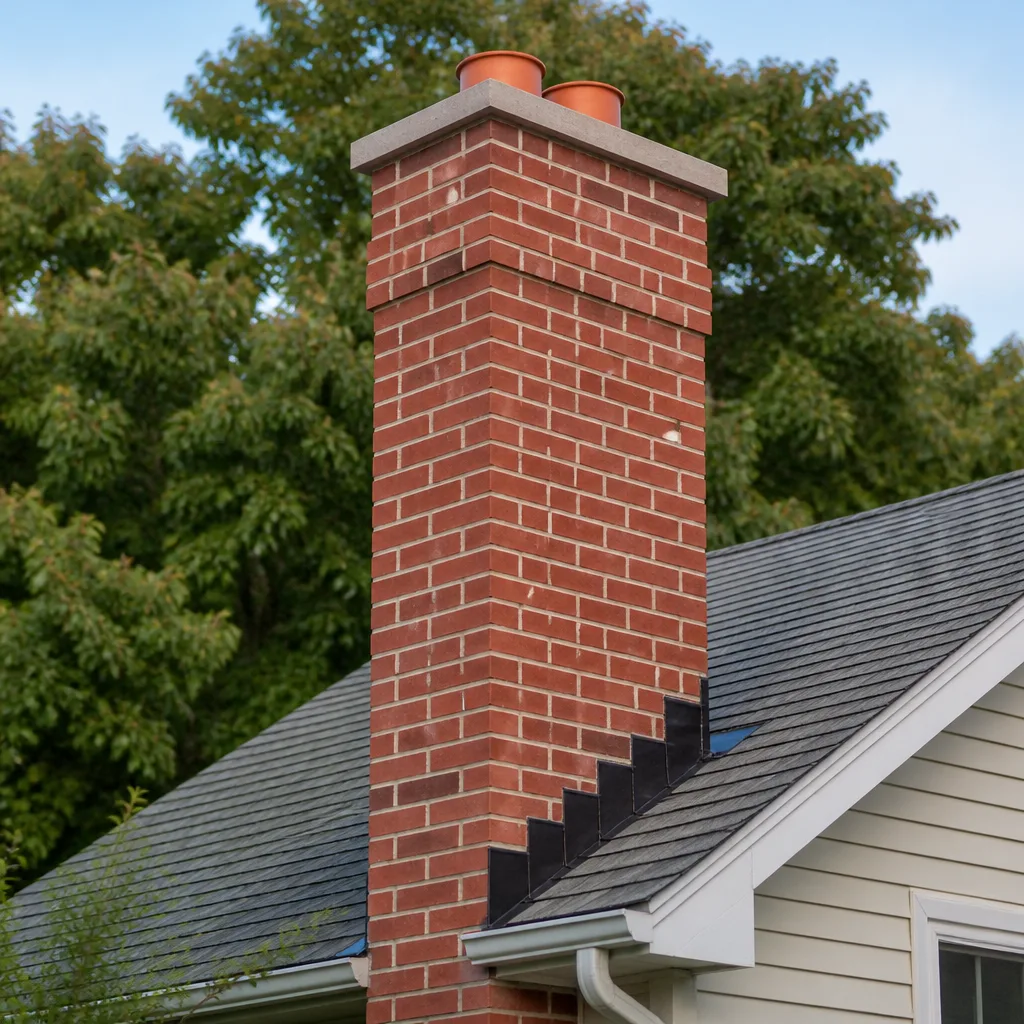 Masonry repair
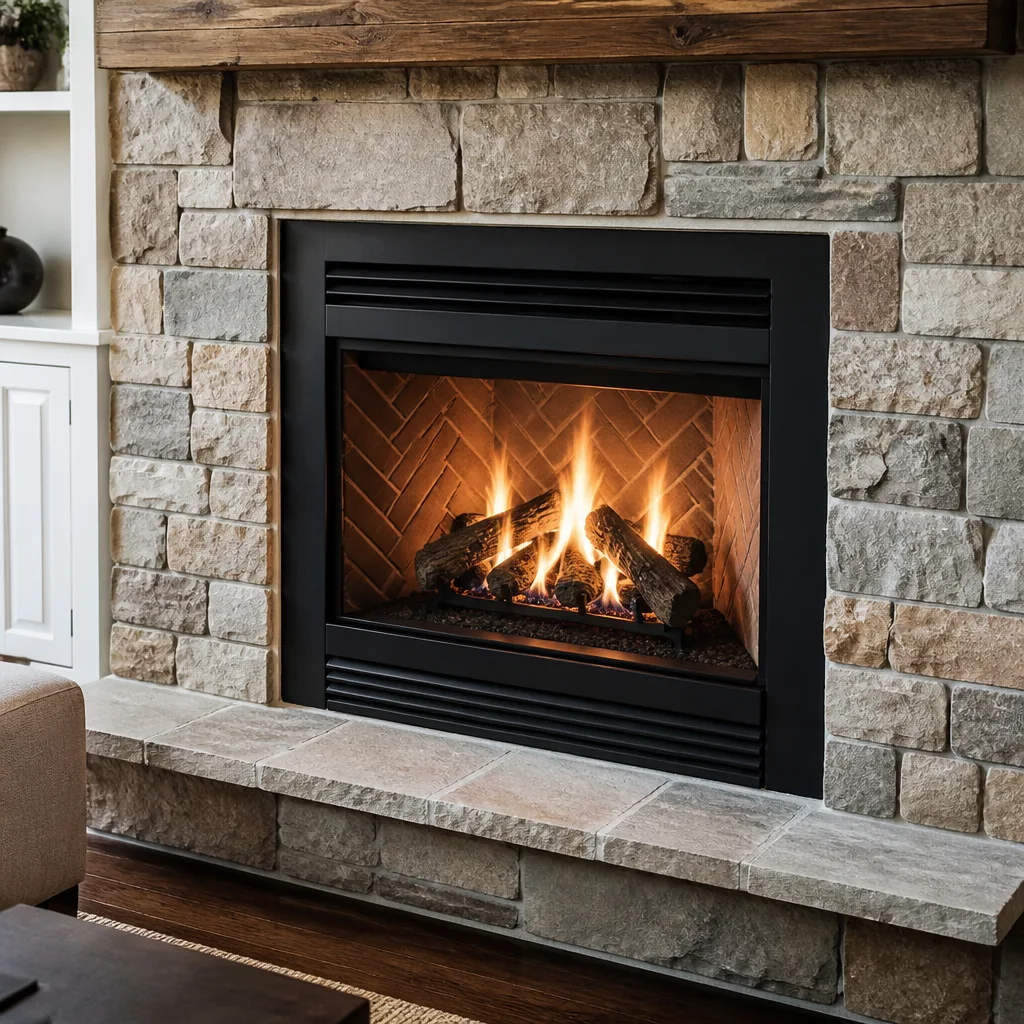 Gas fireplace service
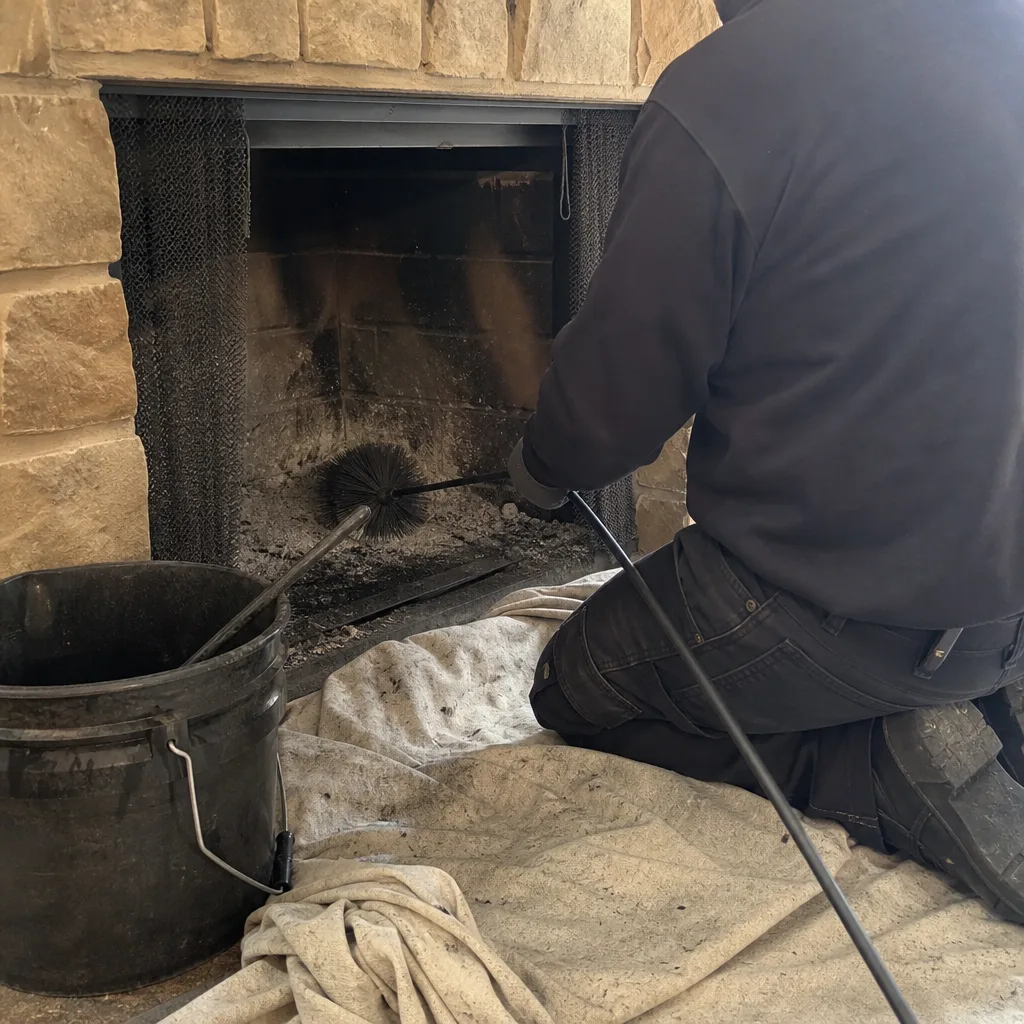
Level 1 sweep and inspection to the NFPA 211 annual standard - flue, crown, cap, and flashing checked and photographed
Chimney sweep logs do not sweep chimneys. They loosen some creosote - which then falls where a brush and vacuum still have to collect it.
Chimney Cleaning Warning Signs: An Evansville Homeowner’s Reference Guide
A white stain running down your chimney’s exterior isn’t cosmetic. It’s efflorescence, and it means water is moving through the masonry from the inside out. That’s an active deterioration process, not a surface blemish you can scrub away. Most warning-sign checklists tell you to “call a professional if you notice anything unusual,” which helps nobody because most homeowners have no baseline for what unusual actually looks like. This guide fixes that. We describe each sign in physical, observable terms, so you can photograph it, describe it accurately on the phone, and know whether it means stop using the fireplace tonight or schedule a visit in the next few weeks. Evansville homes have their own set of chimney stressors, and we’ll cover those too.
Quick Answer
The warning signs that matter most are: smoke rolling back into the room, a strong creosote smell even when the fireplace is cold, white staining or crumbling mortar on the chimney exterior, rust or water stains inside the firebox, and visible gaps or cracked tiles in the flue. Signs that mean stop using the fireplace immediately include smoke backing up into the room, a deep rumbling sound from the flue, or visible creosote glaze (shiny, tar-like buildup). Everything else can usually be scheduled for a sweep and inspection within the next few weeks.
Styles & brands we work with
- Sweep & inspection
- Caps & crowns
- Flue relining
- Masonry repair
- Gas fireplace service
Table of Contents
- How to Rank Urgency: Stop Now vs. Schedule Soon
- Interior Signs: What You See From the Living Room
- Exterior Signs: What the Chimney Looks Like From the Yard
- Draft Problems: Firebox Level vs. Flue Level
- Warning Signs Specific to Gas Fireplace Inserts
- Signs a Previous Repair Was Done Wrong
- Why Evansville Chimneys Age the Way They Do
- What a Proper Inspection Actually Covers
How to Rank Urgency: Stop Now vs. Schedule Soon
Most chimney problems aren’t emergencies. Some are. Getting the ranking right matters because it tells you whether to put the fire out tonight or make a call next week. Here’s how we sort it when a homeowner describes what they’re seeing.
Stop using the fireplace immediately if you see:
- Smoke rolling back into the room. A properly drafting chimney pulls smoke up and out. If smoke is curling out of the firebox into the living room, the flue is either blocked, undersized, or cold. Any of those means combustion gases aren’t leaving the house.
- A deep rumbling or roaring sound from the flue. Wood fires crackle. A low, sustained rumble that sounds like a freight train is a different animal. That’s the sound of a chimney fire drawing hard on air.
- Shiny, tar-like buildup visible up the flue. That’s glazed creosote, and it’s the most flammable form. A stray ember or a hot load of wood can light it.
- Soot flakes falling into the firebox or onto the hearth. This often means the flue is heavily coated and shedding.
- A strong creosote smell that’s present even when the fireplace is cold. This can point to a blocked flue or a downdraft pushing fumes back into the house.
Schedule a visit within the next few weeks if you notice:
- Slow fire starts that require more kindling than usual
- A faint smoky odor in the room after the fire’s been out for a day
- Light surface creosote (dark brown, flaky, or sooty – the kind you can brush off)
- Minor water staining inside the firebox
- Efflorescence on the exterior masonry
- Deteriorating mortar joints that haven’t started to crumble yet
If you’re not sure which category your sign fits, describe it on the phone. Our technicians have up to 13 years of experience reading these symptoms, and they can usually tell you within a minute whether it’s a “stop now” or a “schedule a sweep.”
Interior Signs: What You See From the Living Room
Interior warning signs are the ones homeowners catch first, because they’re in the room where the fireplace lives. Many of them get dismissed as quirks of the house. That’s the problem.
Creosote buildup inside the firebox and flue
Creosote comes in three stages. Stage one is light soot – dark brown or gray, easily brushed off. Stage two is flaky and crusty, still brushable but denser. Stage three is the glaze: shiny, hard, tar-like, and it doesn’t brush off with a standard sweep. If you can see stage three in the firebox throat, that’s a call today. Reaching the flue interior with a flashlight from the firebox is enough to spot it. You don’t need a ladder.
Water stains and rust
Look for rust on the damper, rust on the firebox grate, or a brownish waterline running down the back wall of the firebox. Those point to moisture getting into the system from above – usually a failed crown, a missing cap, or open mortar joints at the top. In Evansville, where spring storms and summer humidity push moisture against masonry, this is one of the most common findings during a chimney sweep.
A damper that won’t open all the way
A stuck or partially closed damper restricts draft. Rust, soot buildup, or a bent damper frame are typical causes. A homeowner will often notice a “tired” fire – one that burns lazy even with dry wood – rather than a stuck damper itself. Check that the handle swings freely through its full arc.
Damaged firebox panels
Look for cracks in the firebrick, gaps in the firebox mortar joints, or metal panels that have warped. Fine hairline cracks in firebrick are normal. Cracks wide enough to fit a coin, or missing chunks of mortar, are not. Firebox damage lets heat reach framing behind the firebox, and that’s a structural concern, not just a cosmetic one.
Exterior Signs: What the Chimney Looks Like From the Yard
Stand back from your house – across the street if you can – and look at the chimney with fresh eyes. The exterior tells you things the interior can’t.
Efflorescence: white staining on the masonry
White, powdery staining, sometimes slightly crystalline, that appears on the chimney exterior. It’s salt from masonry pushed to the surface by water moving through the brick. The stain itself is harmless, but the water behind it isn’t. Efflorescence usually means the crown is cracked, the mortar joints are failing, or the cap isn’t keeping rain out. If you can scratch the white stuff away with a fingernail and it turns powdery, that’s efflorescence. If it’s hard and clinging like a crust, it might be a different problem.
Cracked or spalling brick
Brick faces that flake, peel, or pop off in layers are spalling. It happens when trapped moisture freezes and expands inside the brick. Evansville gets enough freeze-thaw cycling in winter to drive this process, and it’s why chimneys here tend to show their age around the mortar joints before anything else.
Crumbling mortar joints
Take a photo from the ground with a zoomed-in lens. If the mortar between courses is receding, sandy, or missing, the joints are failing. Left alone, that’s how a chimney starts leaning.
Cracked crown and missing cap
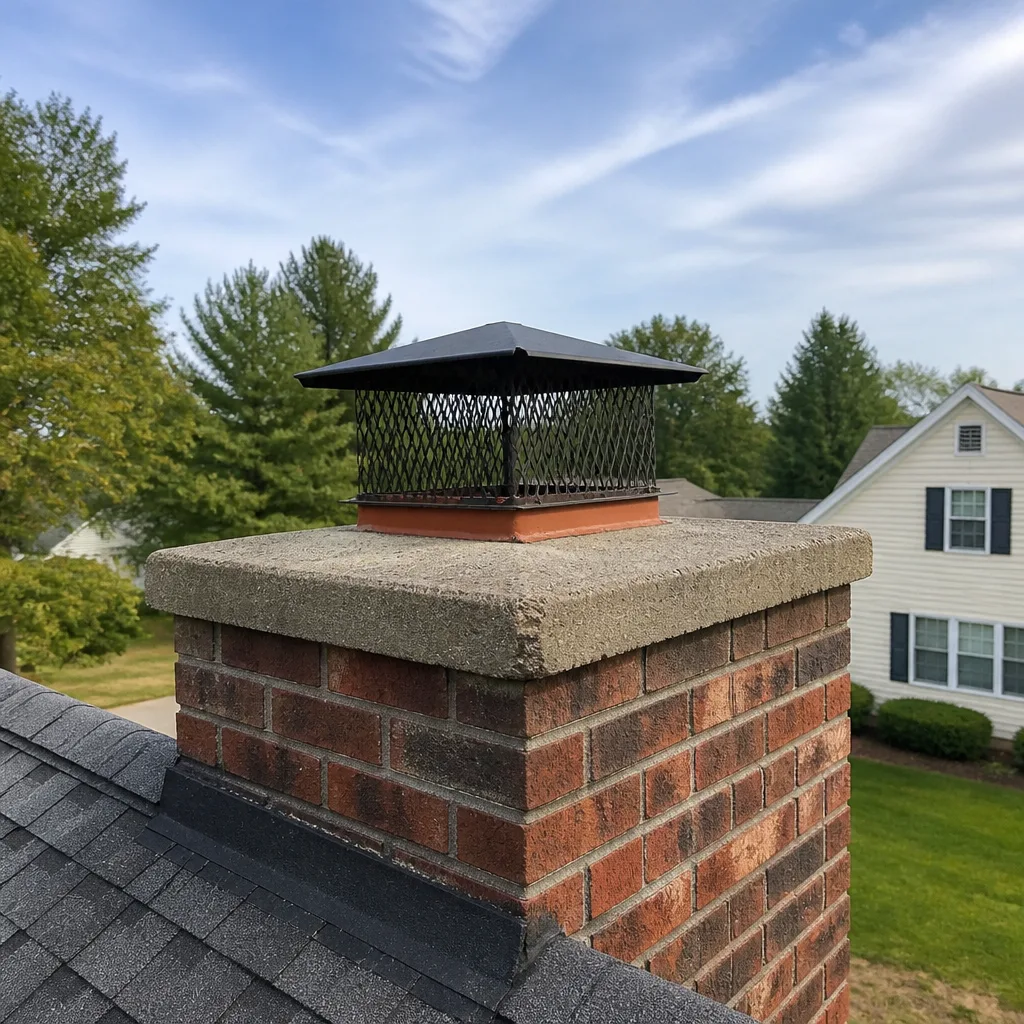
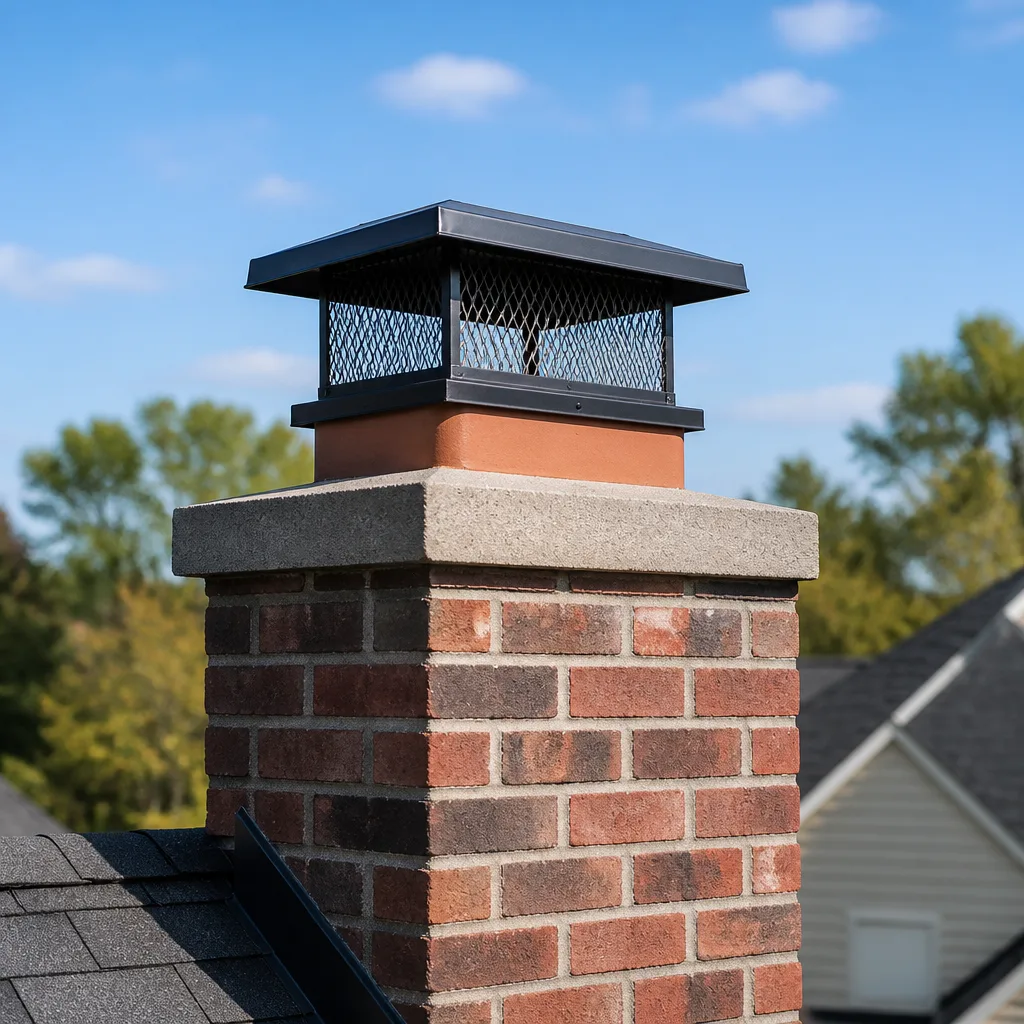
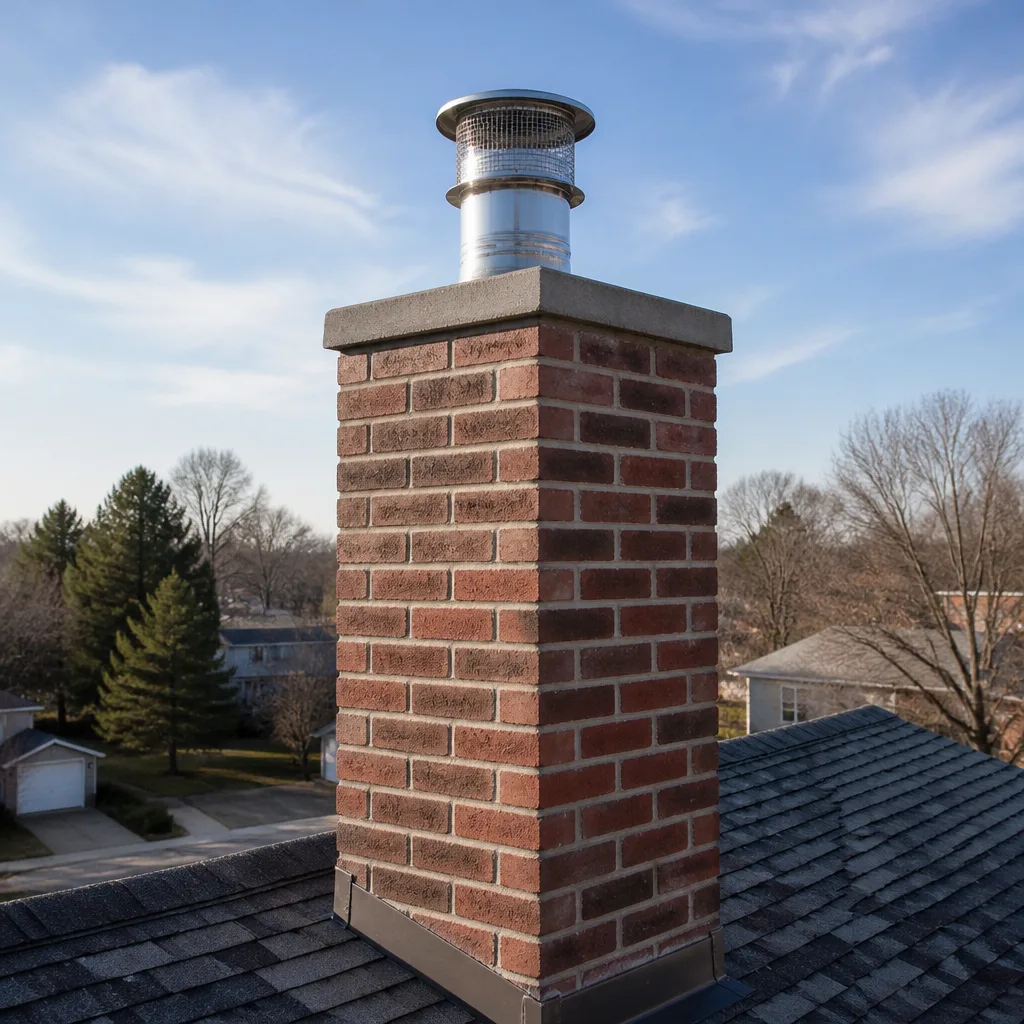
The crown is the concrete slab at the very top. Look for a visible crack running across it, or for masonry that’s chipped away from the flue tile. A cap – the metal or mesh cover that keeps rain, birds, and debris out – should be visible and intact. A missing cap means water is getting straight into the flue.
Soot staining at the top of the chimney
Black streaks running down the exterior from the crown area often mean the flue is venting poorly, or the top of the flue is blocked. If the staining is fresh (as opposed to years old), it typically correlates with a draft problem.
Draft Problems: Firebox Level vs. Flue Level
Draft complaints – slow fire starts, smoke in the room, a fire that just won’t catch – are the most misdiagnosed chimney symptoms we hear about. The cause matters because a firebox-level fix and a flue-level fix are entirely different jobs.
Firebox-level draft problems
These happen at or near the fireplace opening itself. Typical causes:
- The firebox is too large for the flue size, and the opening pulls more air than the flue can carry away
- The damper is partially closed or jammed
- Furniture, a screen, or glass doors are restricting airflow to the fire
- A nearby exhaust fan (kitchen or bath) is out-competing the chimney for indoor air
- The firebox is cold, so the flue can’t get started
Flue-level draft problems
These happen above the firebox, in the flue itself:
- Blockage. A bird nest, leaves, a fallen flue tile, or a collapsed liner section choking the flue.
- Oversized flue. A flue that’s too big for the fireplace won’t heat up enough to draw properly. This often shows up after an insert is installed into a fireplace designed for a larger opening.
- Poor flue location. A flue that’s too short, or that sits on an exterior wall in a house with a taller roofline next door, will struggle to draw on windy days.
- Cracked flue tiles. Cracks reduce the air seal and let cool air enter the flue mid-column, which cools the exhaust and weakens draft.
The best way to separate the two is with a camera inspection. Our technicians send a camera up the flue and photograph what they find, so you can see the actual blockage or damage on screen instead of guessing.
Warning Signs Specific to Gas Fireplace Inserts
Gas inserts have their own failure modes, and the warning signs are different enough that homeowners often miss them because they’re looking for wood-burning symptoms.
What to watch for with a gas insert:
- A yellow, lazy flame where you used to see a blue flame with blue tips. Blue with a hint of yellow at the tip is normal. Fully yellow, orange, or lifted flames can mean incomplete combustion – not something to ignore.
- Soot on the logs or glass. Soot deposits on gas logs or a persistent black film on the glass door mean the air-to-fuel mixture is off. That’s a combustion problem, not a “give it a wipe” problem.
- A “hollow” or flickering sound when the insert runs. A well-running gas insert produces a soft, steady flame sound. Popping, rumbling, or a hollow whoosh can indicate a venting issue.
- Fumes or a “gas smell” that isn’t raw gas. A faint burn smell is normal on first startup. A persistent sharp smell, or any smell at all after the unit’s been running for a while, needs a look – exhaust byproducts belong up the flue, not in the room.
- A cold draft from the fireplace when it’s off. Gas inserts on a direct vent should be sealed tight against the flue. Cold air moving down the chimney suggests the vent terminal or seal isn’t doing its job.
- Condensation on the glass. Some condensation on startup is normal. Persistent wetness past the first 20 minutes can mean a venting problem that’s letting cool air meet hot combustion gases.
Gas systems have no creosote to worry about, but they still need an inspection. Vent terminals, seals, and the liner connection all degrade. We work with venting products from Olympia Chimney and DuraFlex for gas insert applications, which means we can resolve what we find rather than just flagging it.
Signs a Previous Repair Was Done Wrong
We get called to a lot of chimneys where a repair was made at some point in the past – often by a previous owner – and the repair itself is now the problem. Here’s how to spot bad work.
Bad liner work
- A liner that’s crimped, kinked, or collapsed partway up. Flexible liners kink when they’re forced around a bend or installed without the right amount of clearance. A kink reduces cross-section, which kills draft and eventually catches creosote.
- A liner that’s a different size than the flue tile. Sometimes the liner is undersized to make installation easier, which causes chronic smoke issues.
- Visible gaps at the top or bottom connection. The liner should terminate cleanly at the crown and at the firebox. Gaps mean exhaust can leak back into the chimney cavity.
- A stainless liner with no top plate or a generic strap holding it. There should be a proper top plate secured to the crown, not a strap cinched around the flue tile.
HeatShield is the standard for restoring flue tiles that are cracked but still sound – it’s a smooth, cementitious coating applied to the inside of the tile, and it restores the flue’s seal without demolition. If someone “repaired” a cracked flue by brushing tar over the crack, that’s not a liner repair. That’s a fire waiting for a warmer day.
Mismatched or improvised caps
A proper cap fits the flue tile or the crown with clearance and a spark screen. A bad one is either a loose stainless pan sitting on top with no anchoring, an undersized cap that blocks airflow, or a homemade solution involving mesh and wire. Look at the top of your chimney from the ground with binoculars – if the cap looks like it’s about to blow off, it probably is.
Failed crown coatings
The crown is supposed to be a poured concrete slab with a slight slope and a drip edge that overhangs the chimney face. A coating-based “crown repair” – one where a sealer was brushed over a cracked crown – usually fails within a season or two, especially with Evansville’s summer rain and winter freeze-thaw. Look for peeling sealer, hairline cracks coming back through the surface, or the original crack still visible under the coating.
Cracked mortar dressed up with caulk
Caulk on exterior mortar joints is a temporary fix at best. It doesn’t bond well to masonry, it traps moisture, and it typically fails within a year. If you see a color-mismatched, rubbery line between the bricks, someone’s been at it before.
Why Evansville Chimneys Age the Way They Do
Every city has its own chimney-wear pattern, and Evansville is no exception. Understanding the local pattern helps homeowners recognize what’s a sign of trouble versus what’s just normal age.
Evansville sits in a climate band with hot, humid summers and cold winters that swing across the freeze-thaw line repeatedly from December through February. That cycle is the engine behind masonry damage: water gets into a hairline crack during a warm rain, freezes overnight, expands, and widens the crack. Repeat that a few dozen times a winter and a small mortar flaw becomes a crumbling joint. Homeowners in older Evansville neighborhoods – particularly the historic housing stock near downtown and along the river – tend to see this first, because the mortar those houses were built with wasn’t formulated for today’s winter cycling.
The humidity side of the equation matters too. A chimney that sat unused through a humid summer absorbs moisture from the air as well as from rain, and the first cold fire of the year can drive that moisture out slowly – which is why draft problems and smoke in the room often show up in the first few weeks of the season even when nothing was wrong the year before. If your fire behaves badly in November and settles down by January, moisture is a likely culprit.
Homes in Evansville with tall, exposed chimneys – the kind that stand above the main roofline – also catch wind more aggressively. That’s not damage, but it does affect draft, and it’s worth knowing before you assume a chimney problem is a mechanical one. If you’re seeing smoke on windy days only, that’s a draft signature, not a blockage signature.
For problems that have already crossed out of “warning sign” territory and into “this needs fixing,” our chimney repair work covers everything from crown rebuilds and mortar repointing to full relining – the same kind of work we’ve handled on chimneys across Evansville and the surrounding area.
What a Proper Inspection Actually Covers
An inspection isn’t a sweep. They’re different jobs, and knowing what a proper inspection should cover helps you spot shortcuts.
Step 1: Exterior walkaround
The technician should look at the chimney from the ground, note the crown, cap, mortar, and flashing, and photograph anything that’s flagged. Photos matter because you can compare them year over year.
Step 2: Firebox and damper check
Firebox panels, damper operation, and the smoke chamber are inspected from inside the room. This is where firebox-level problems (undersized firebox, warped damper, cracked panels) get caught.
Step 3: Camera scan of the flue
A video camera runs the full length of the flue – from the firebox up to the top of the chimney. That’s how you see cracked flue tiles, joint separation, creosote stage, gaps in a previous liner, or a blockage. A camera inspection with a photo report included is the standard our technicians work to, and it’s the difference between “I think you need a liner” and “here’s the crack, here’s the size, here’s why it matters.”
Step 4: Draft test and, if needed, combustion analysis
A draft test confirms the chimney is actually pulling. On gas systems, combustion analysis tells you whether the appliance is burning cleanly. Both are quick and both are information you should walk away with.
Step 5: Written report and photos
You should end an inspection holding a written report plus the photos. Not a verbal summary, not a phone call later. If a technician can’t show you the evidence, don’t approve repair work – on the spot or otherwise. We don’t recommend anything we can’t show you a photo of, and we’ll tell you plainly when something can safely wait a season.
Common Mistakes to Avoid
- Assuming a chimney needs cleaning because it “looked dirty” last year. Creosote accrues based on how much wood you’ve burned and how hot the fires ran, not how long it’s been since a sweep. A light-use year may need no sweep at all; a heavy smoke-dragon year may need two.
- Treating efflorescence as a cleaning problem. Brushing off the white stain doesn’t stop the water moving through the masonry behind it. The stain comes back until the source – usually the crown or mortar – gets addressed.
- Booking a sweep when the problem is draft, or vice versa. A sweep clears creosote. It doesn’t fix an undersized flue, a stuck damper, or a cracked flue tile. If your fire won’t start or smokes into the room, ask for an inspection first, not a sweep.
- Approving liner work without seeing photos of the existing flue. A camera report you can look at is the only way to know whether a liner is actually needed, what size, and whether a resurfacing product like HeatShield can restore what’s there instead of a full reline.
- Hiring a generalist who treats the chimney as a side job. Chimney diagnosis is pattern recognition, and it comes from doing the work every day. A handyman who rotates across trades will miss things a chimney-exclusive technician catches immediately.
- Skipping the post-repair inspection. Any liner install, crown rebuild, or flue repair should be followed by a camera check to confirm the work is where it should be. Ask for it.
- Letting an unused chimney sit indefinitely. A chimney that hasn’t been used in years still takes on water, still develops cracks, and still needs to be checked before the first fire – especially if the previous owner’s maintenance history is unknown.
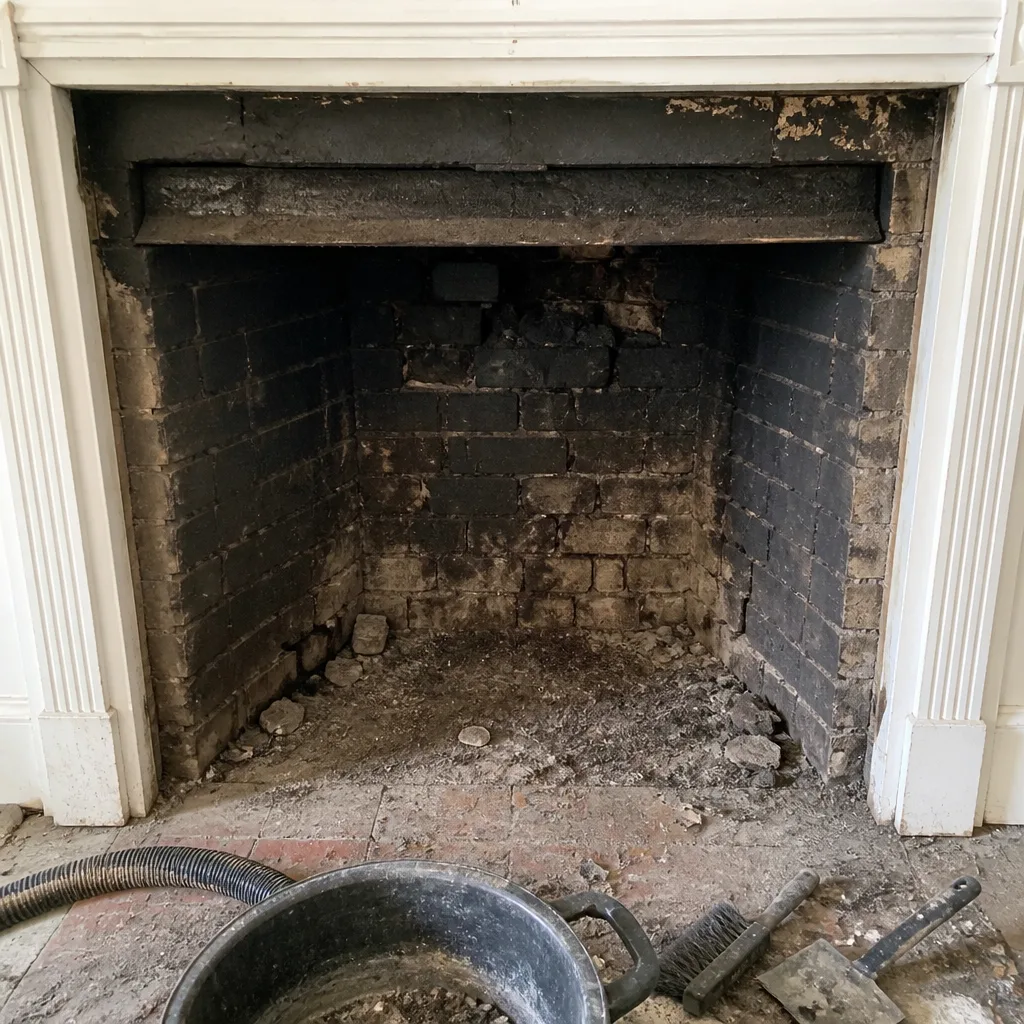
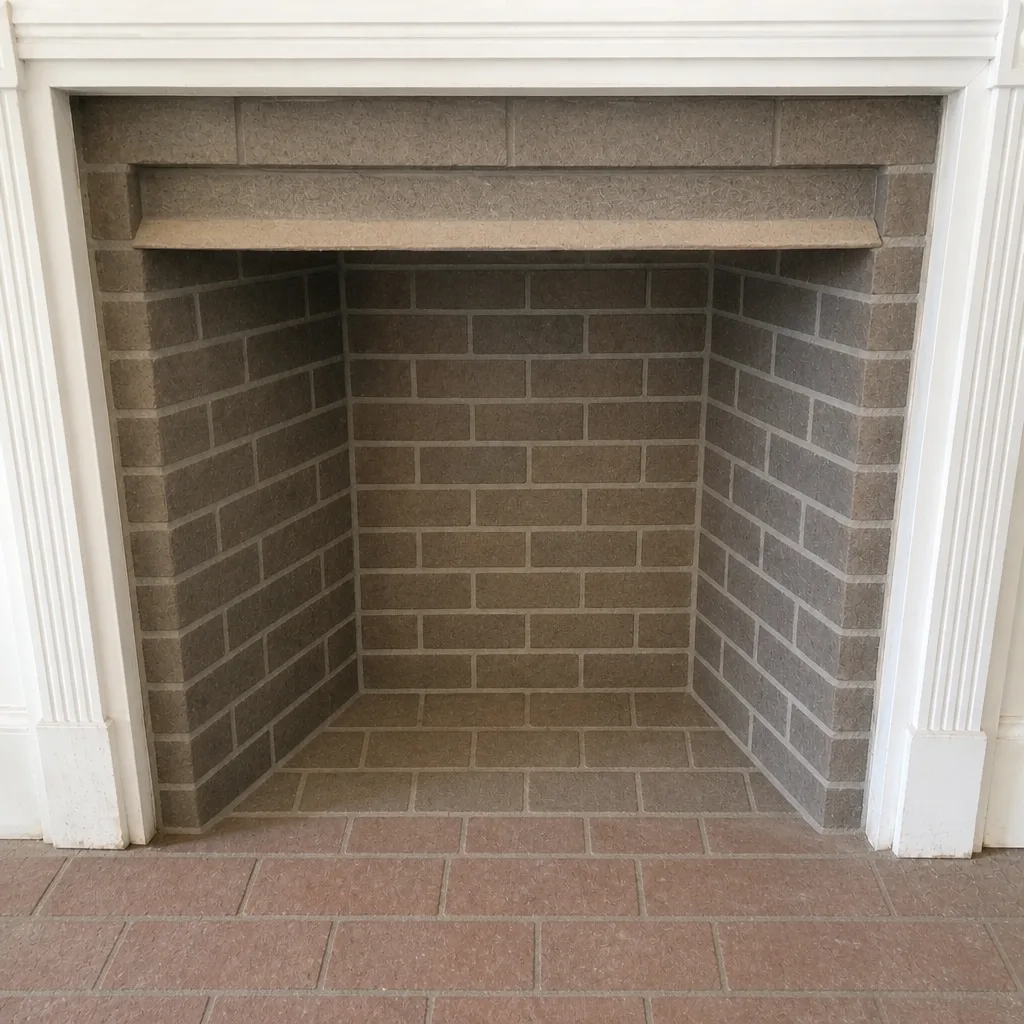
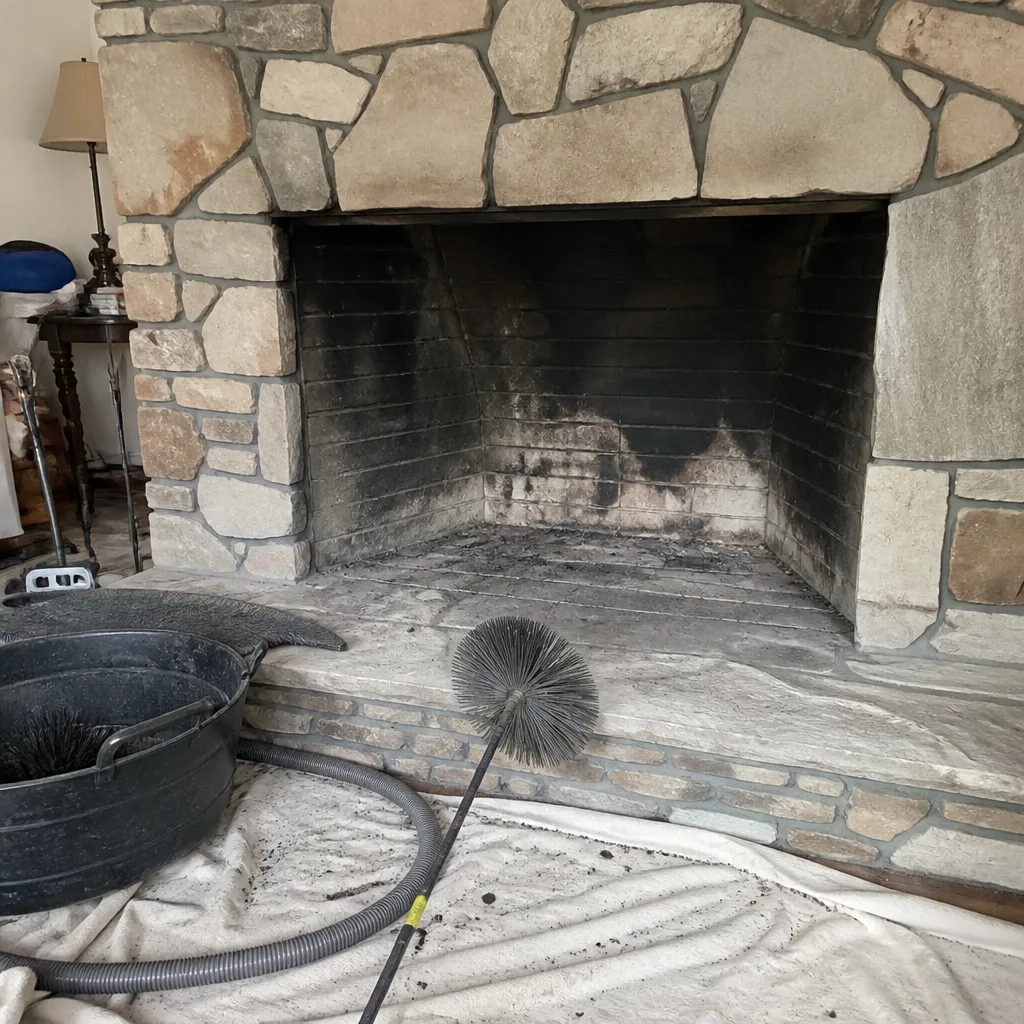
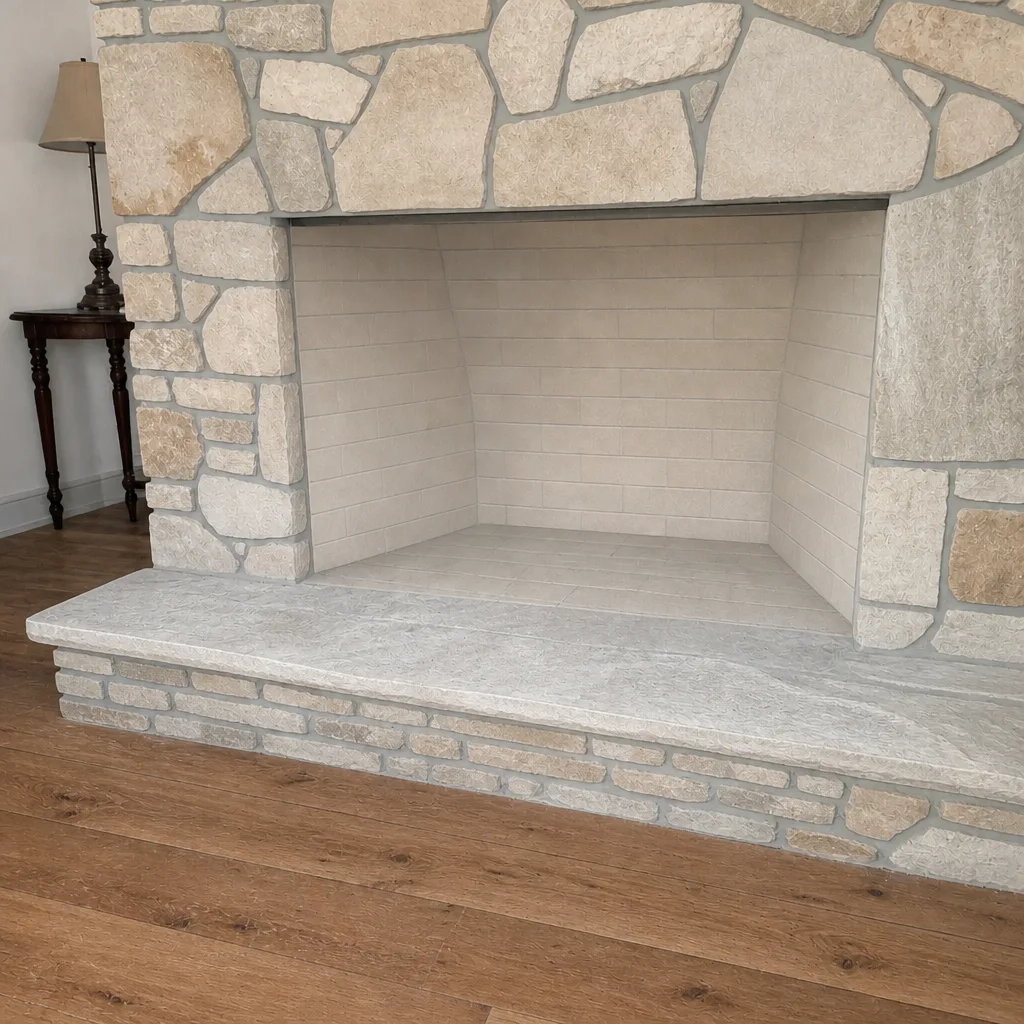
See the difference
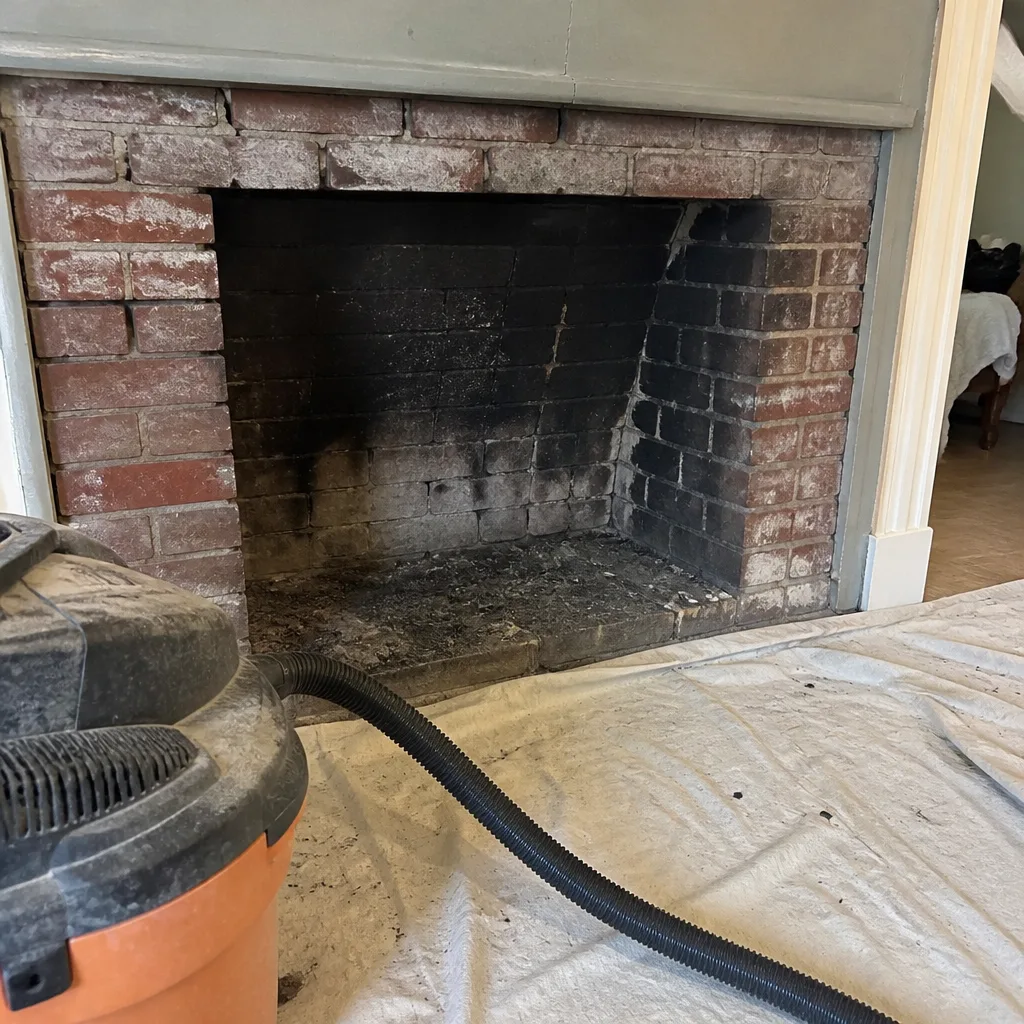 Before
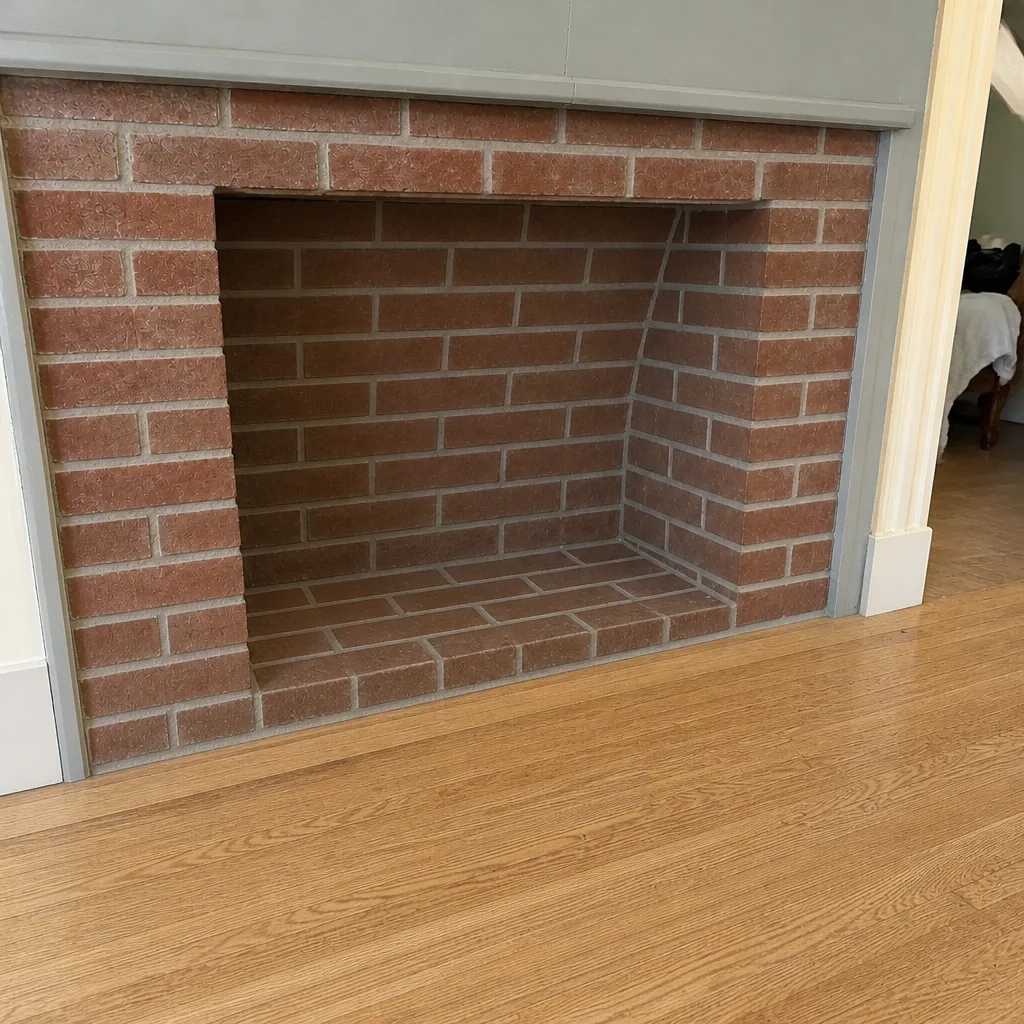 After
 Before
 After
 Before
 After
When to Call a Professional
Call for anything on the “stop now” list, and call if you can’t tell which list a symptom belongs on. Realistically, the specific scenarios we see most are: a new-home purchase where the fireplace has no known history; an insurance or home-inspection report that flagged the chimney; smoke in the room on the first fire of the season; visible white staining or crumbling mortar on the exterior; and any suspicion that a previous liner or crown job wasn’t done properly. Those all warrant a trained set of eyes, not a “wait and see.”
Chimney Sweep Evansville offers free estimates in Evansville. Call Chimney Sweep Evansville at (833) 365-6875 to book a sweep, inspection, or to describe what you’re seeing. We inspect before we sweep, so you know exactly what’s up there. We answer 24/7. Fast dispatch from 7am to 7pm, Sunday through Friday.
Frequently Asked Questions
The general rule for wood-burning chimneys is an annual inspection, with a sweep whenever creosote has built up to about an eighth of an inch. In practice, an Evansville homeowner who burns regularly through the winter may need one sweep a year, and a household that uses the fireplace a few times a month may only need a sweep every second or third year. An annual inspection tells you which. Call (833) 365-6875 to book a sweep and inspection – estimates are free.
The most photogenic warning signs are on the exterior of the chimney – white efflorescence staining, cracked mortar joints, a chipped or cracked crown, or a missing cap. Interior signs are harder to see: flaky brown or black creosote inside the firebox, rust on the damper, water stains on the firebox rear wall, or hairline cracks in the flue tile. Describe what you see and where, and a technician can usually triage urgency over the phone.
Yes, if the smoke is rolling out of the firebox and into the living room rather than drafting up the flue. Smoke in the room means exhaust gases – including carbon monoxide – are finding their way into the house instead of up the chimney. Put the fire out, open a window, and call. We answer 24/7 – a call outside dispatch hours is booked into the next opening, Sunday through Friday, 7am to 7pm.
A cleaning (a sweep) removes creosote, soot, and debris from the flue and firebox. An inspection evaluates the whole system – crown, cap, masonry, flue tiles, liner, damper, draft – and produces a report with photos. Cleaning without inspection misses problems; inspection without cleaning can’t evaluate what’s underneath the creosote. We do both, in one visit. Call (833) 365-6875 for a free estimate.
Not a sweep in the wood-burning sense – gas inserts don’t produce creosote – but they still need an inspection on a routine schedule. Vent terminals, seals, the liner connection, and combustion quality all need checking, and many of the warning signs (yellow flames, soot on the logs, a persistent smell) are combustion problems that only a trained inspection will diagnose. We handle gas insert inspections alongside wood-burning work; we use venting components from Olympia Chimney and DuraFlex when a repair is needed.
We don’t quote a price on the phone because chimney work is priced per job, and the written estimate you get after the inspection sets the final number. Sweeping a lightly soiled flue is one job; sweeping a heavily glazed flue plus a camera inspection plus a recommendation for liner work is a different one. Call (833) 365-6875 for an exact quote – estimates are free. We’ll show you the photos before we recommend anything.
The Bottom Line
Warning signs only work if you know what you’re looking at. The white stain on the outside of the chimney is moisture moving through masonry. The rumble in the flue is a chimney fire drawing air. The smoke rolling into the room is exhaust finding the wrong path. Those signs rank as stop-now. The flaky creosote, the crumbling mortar, the stuck damper, and the rust on the firebox grate rank as schedule-soon – and a camera inspection tells you which of those is actually a problem and which can safely wait. Take a photo, describe it plainly, and call us. We’ll tell you what we find in plain language, with no upsell pressure, and we handle the inspection, the sweep, and the repair under one call.
Written by the team at Chimney Sweep Evansville.