
Last updated November 15, 2026
 Sweep & inspection
 Caps & crowns
 Flue relining
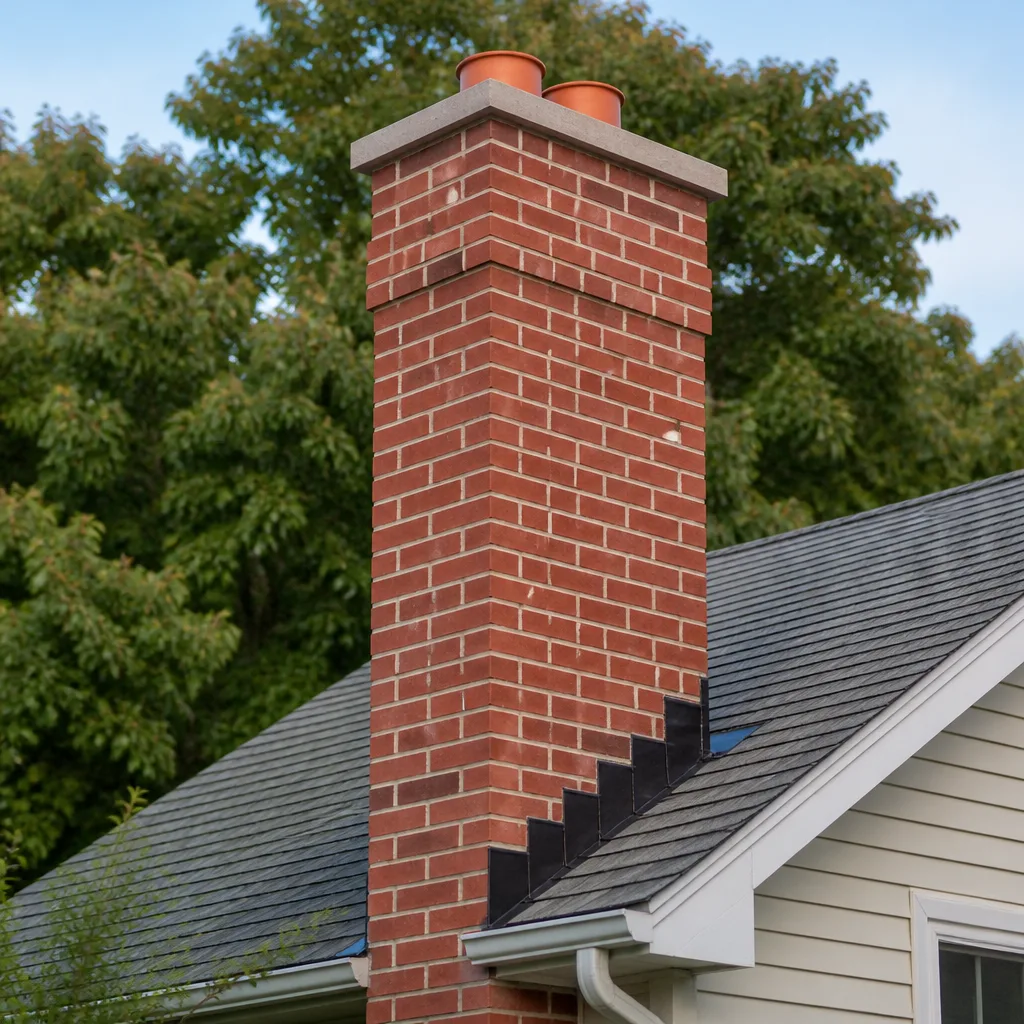 Masonry repair
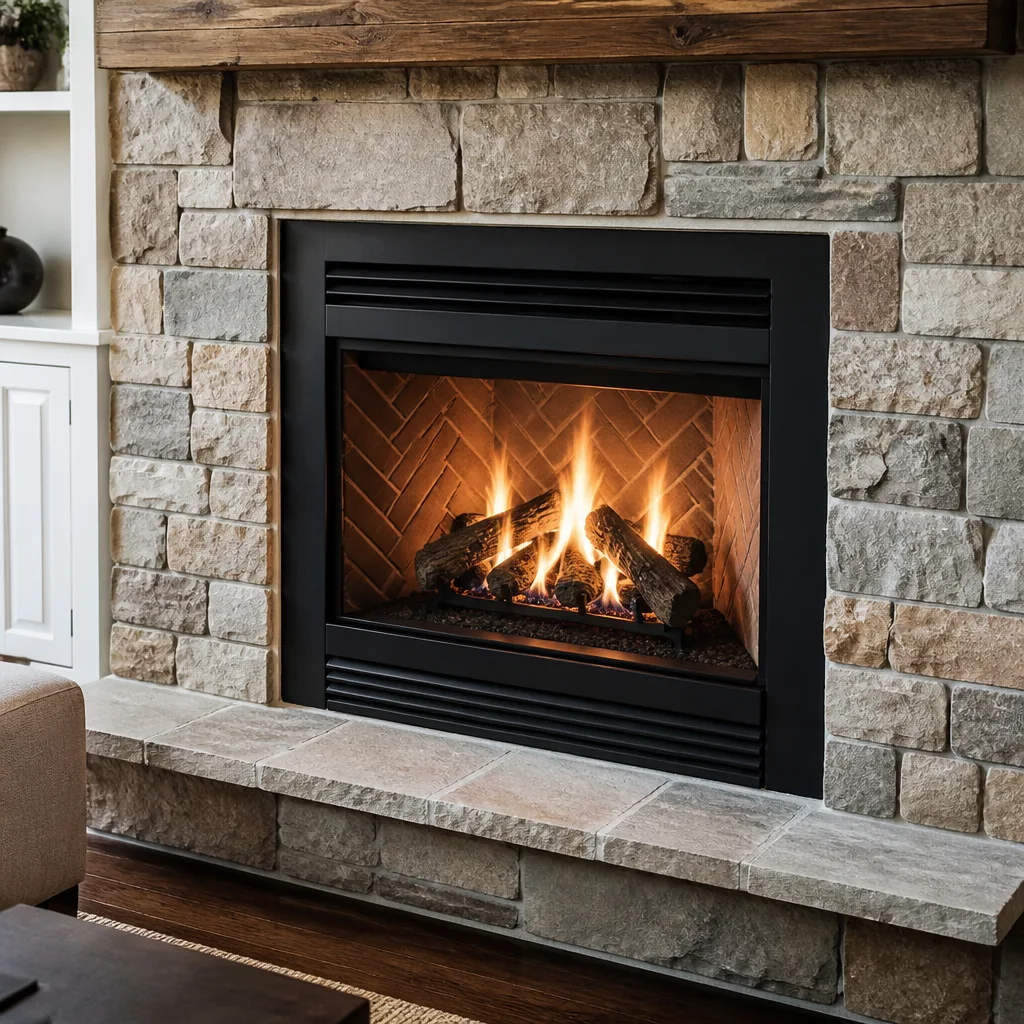 Gas fireplace service
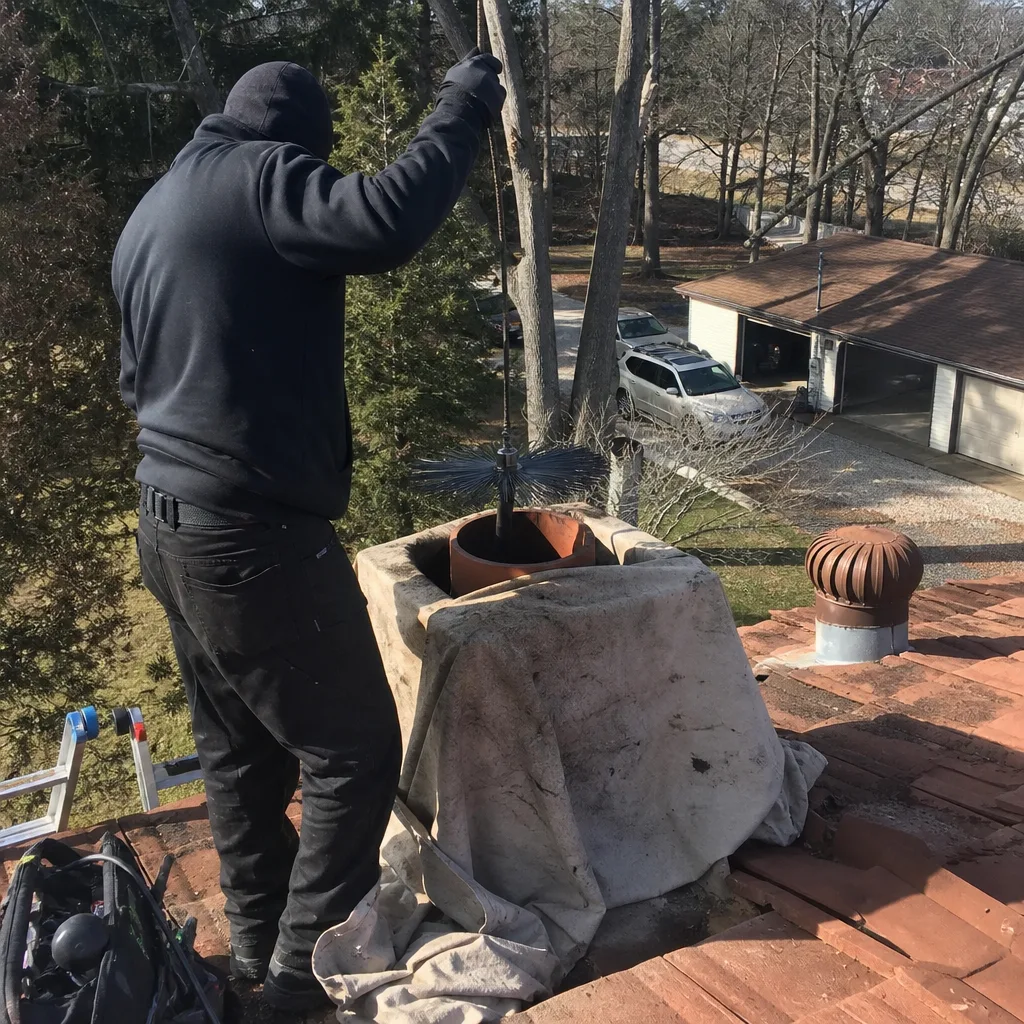
Level 1 sweep and inspection to the NFPA 211 annual standard - flue, crown, cap, and flashing checked and photographed
Chimney sweep logs do not sweep chimneys. They loosen some creosote - which then falls where a brush and vacuum still have to collect it.
Chimney Sweep Troubleshooting in Evansville: Common Problems and How to Fix Them
If your fireplace smokes into the room every time you light it, the instinct is to call for a sweep. But a dirty flue is the least likely cause. Backdraft is usually a pressure, height, or cap problem, and sweeping alone won’t fix any of them. The same gap shows up with odd smells and weak draft: homeowners chalk them up to “old house quirks” when there’s a specific, diagnosable defect behind each one. This guide maps the symptom you’re seeing to the actual cause, separates performance problems from structural ones, and shows you which issues you can spot yourself and which need a camera in the flue. We’ll cover why Evansville’s climate is hard on masonry and how to tell trouble from normal aging.
Quick Answer
Most chimney problems in Evansville fall into two buckets: performance issues (smoke rolling back, weak draft, persistent odor) and structural issues (spalling brick, cracked flue tiles, crumbling mortar joints). Performance problems are usually fixed with a cap adjustment, a height change, or better airflow, while structural problems need repair or relining before they get worse. A dirty flue is rarely the cause of either. The right first step is an inspection that identifies which problem you have, not a sweep that assumes it.
Styles & brands we work with
- Sweep & inspection
- Caps & crowns
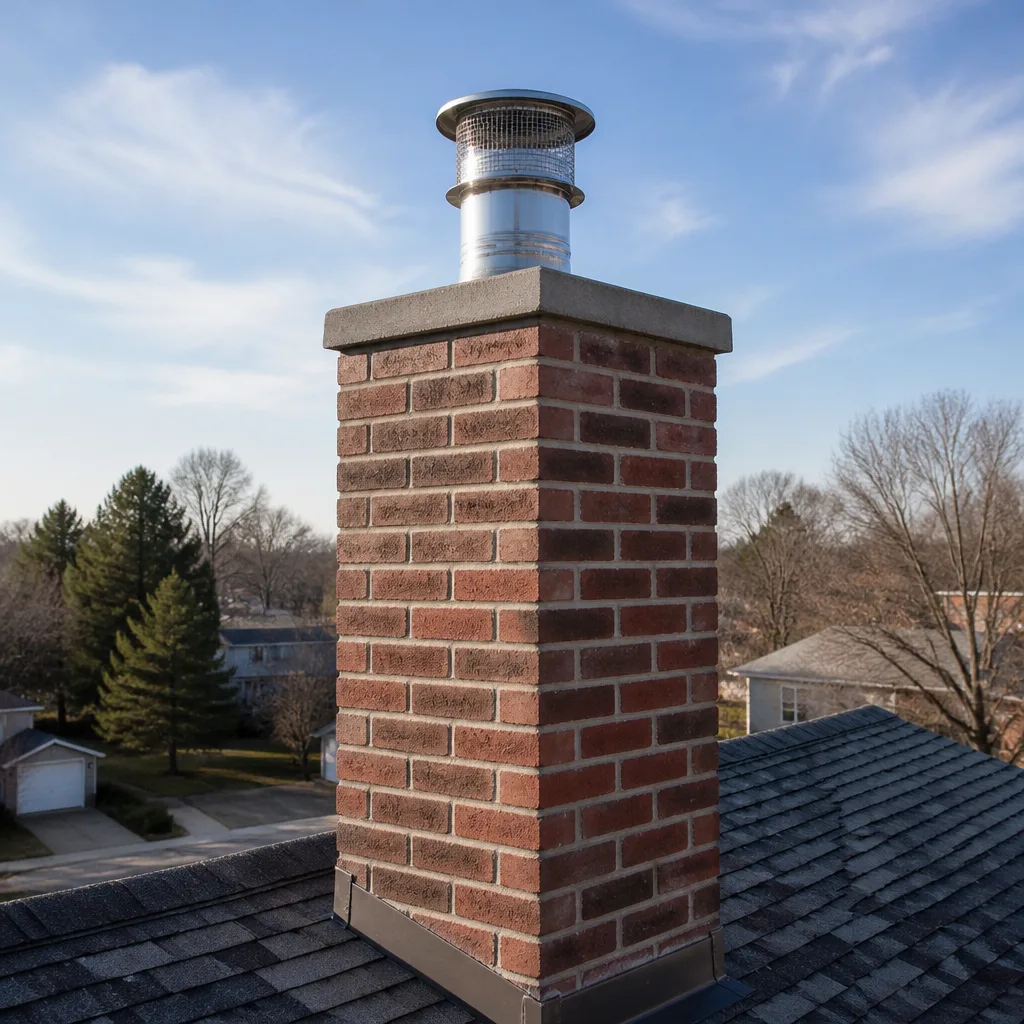
- Flue relining
- Masonry repair
- Gas fireplace service
Table of Contents
- Performance Problems vs. Structural Problems
- Smoke Coming Into the House: Diagnosing Backdraft
- Why Evansville Humidity Chews Through Mortar
- What That Smell Is Telling You
- Why a Just-Swept Chimney Can Still Draft Poorly
- Your Symptom Decision Tree
- Structural Warning Signs You Can See
- Step-by-Step Troubleshooting Sequence
Performance Problems vs. Structural Problems: Different Diagnoses, Different Fixes
Chimney troubleshooting starts by sorting the problem into one of two categories. Get that wrong and you’ll spend money on the wrong repair. Performance problems are about how the chimney moves air and smoke. Structural problems are about what the chimney is made of and whether it’s holding together. They can exist together, but they don’t fix each other.
Performance problems include smoke spilling into the room, draft that feels weak when you first light a fire, cold air dumping down the flue on a windy day, and odors that show up when the chimney is idle. These are airflow and pressure questions. The fix is usually a cap, a height change, a damper adjustment, or addressing the way the house itself moves air.
Structural problems include spalling brick faces, cracked or displaced flue tiles, failed mortar joints, a crumbling crown, and rusted dampers or damper frames. These are material failures, and they get worse with time and weather. A sweep cleans the flue; it doesn’t rebuild it. When we look at a chimney, we check both categories before we recommend anything, because a homeowner hearing “you need a liner” should be seeing the cracked tile that says so, not taking it on faith.
In our experience across Evansville, the two problems often show up together. A cracked flue tile lets in moisture, which cools the flue, which weakens draft, which makes the fireplace smoke. Fix the draft and you’ve hidden the tile problem. That’s why we inspect before we sweep, so you know exactly what’s up there.
Which problems need which fix
- Smoke spill or weak draft: performance fix (cap sizing, stack height, airflow)
- Persistent smell when idle: performance or creosote, sometimes animal intrusion
- Spalling brick or crumbling mortar: structural repair
- Cracked flue tiles: structural repair, often relining
- Water in the firebox: cap, crown, or flashing repair
Smoke Coming Into the House: Diagnosing Backdraft
Smoke rolling out of the firebox into the room is the most common complaint we hear, and a dirty flue is the least likely cause. Backdraft happens when the pressure inside the house is lower than the pressure at the top of the chimney, so the smoke has nowhere to go but out the front. That’s a pressure, height, or cap problem, and sweeping alone won’t fix any of them.
The most frequent causes we look at first:
- Stack height too low. If the chimney doesn’t rise far enough above the roofline and nearby structures, wind eddies push air back down the flue. Local building codes generally want the flue to clear the roof by a set margin, and a short stack is a common culprit on older homes.
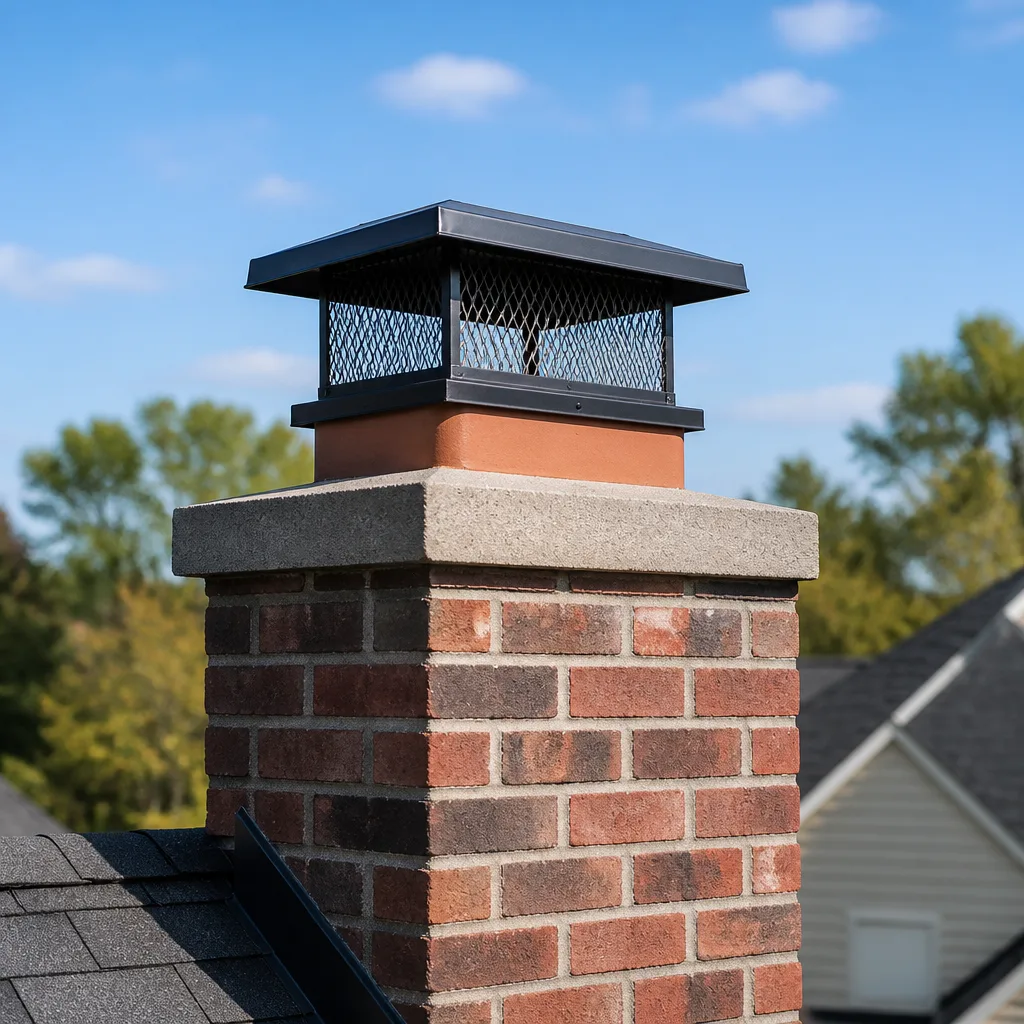
- Wrong cap size or type. A cap that’s too restrictive or placed wrong can choke the flue or create turbulence at the top. Caps are there to keep rain and animals out, not to throttle the draft.
- Flue-to-firebox ratio. The flue has to be matched to the firebox opening. A flue that’s too small for the firebox can’t move the smoke fast enough, and a firebox that’s too tall for its flue is a classic smoking fireplace.
- House pressure. Tight modern windows, exhaust fans, and other appliances pulling air out of the house can depressurize it. When the house is tighter than the chimney, the chimney loses.
- Chimney location. A flue on an exterior wall runs colder than one on an interior wall, and a cold flue drafts poorly until it warms up.
The diagnostic order matters. We check the cap and stack first, then the firebox-to-flue relationship, then the house pressure. If you want a clear picture of how a chimney sweep fits into that process, it’s the cleaning step that follows the diagnosis, not the diagnosis itself.
Why Evansville’s Humid Ohio River Valley Climate Chews Through Mortar
The most common serious damage we find is deteriorated mortar and spalling brick, and the local climate deserves most of the blame. Evansville sits in the Ohio River valley, where humid summers alternate with freezing winters. Masonry doesn’t mind wet or cold on its own; it’s the wet-then-freeze cycle that does the damage.
Here’s what happens. Brick and mortar are porous. When humid summer air and rain soak into the mortar joints, water works its way in. Then winter hits, the water freezes, expands, and pry open the joint a little more each time. Over several seasons, joints that looked fine start to crumble. Brick faces spall, which means flakes and chunks shear off the surface. It looks like the brick is peeling. That’s not normal aging. It’s moisture cycling.
To tell trouble from routine aging, look at three things:
- Normal aging: hairline cracks in the mortar that are wider at the top than the bottom, slight color fading, the surface wearing smooth.
- Moisture damage: mortar that crumbles when you poke it with a screwdriver, white powdery deposits on the brick (efflorescence), brick faces that are flaking or pitted, and joints that are receding deeper than they should.
- Active failure: brick that’s loose, a crown that’s cracked at the joints, water stains running down the firebox, or rust on the damper. These mean water is already inside the system.
The fix lines up with the damage. Early mortar erosion can be caught and corrected before the brick itself is affected. That’s why we treat a chimney repair walk-around as part of every inspection. A chimney that’s holding up in this climate is one that’s been watched, not one that’s simply never been touched.
What That Smell Is Telling You: Creosote vs. Animals vs. Negative Pressure
A chimney smell that shows up when the fireplace is idle almost always has one of three causes, and each smells different. Matching the smell to the cause is the fastest way to narrow it down before anyone climbs on the roof.
Creosote
Creosote smells like wood smoke or asphalt, and it’s strongest in humid weather and on warm days when the chimney isn’t drafting. Creosote is the byproduct of burning wood, and it lines the flue. A little is normal after a season of burning; a lot is a fire hazard. If the smell is smoky and gets worse in summer, creosote buildup is the first suspect, and a sweep is the answer.
Animal intrusion
Animals in the flue or on the smoke shelf smell different: musky, sharp, or plainly like urine. Birds, squirrels, and raccoons get in through an uncapped or failed cap, and their nesting material and droppings sit in the chimney. The smell can be worse in spring and fall when animals are moving. This is a cap problem plus a sweep, not just a cleaning problem, and it’s the one cause where a cap and screen matter as much as the clean-out itself.
Negative pressure
Negative pressure doesn’t have a smell of its own. Instead, it pulls smells out of the house or down the chimney. It’s the “cold fireplace smell” that appears in early fall before burning season, when the chimney is cold and the house is tight, or the smell that shows up on a windy day. If your chimney smells cold and musty and the smell goes away once a fire is burning, pressure and cold flue are the likely cause, not creosote.
When we assess an odor complaint in Evansville, we check all three. We’ve seen houses where a homeowner spent months chasing a smell that turned out to be a bird nest above the smoke shelf.
Why a Recently Swept Chimney Can Still Have a Draft Problem
This one trips up a lot of homeowners: the chimney was just cleaned, and it still smokes. That’s not a sign the sweep did a bad job. Cleaning removes creosote, but it doesn’t change how the chimney performs. If the draft was weak before the sweep, it’s weak after, because the sweep doesn’t touch the cap, the stack height, or the flue-to-firebox ratio.
The four things that actually govern draft are:
- Cap sizing and type. A cap that’s too small restricts airflow; one that’s too large or placed wrong creates turbulence. Cap sizing is a real design question, not a one-size-fits-all part.
- Flue-to-firebox ratio. The flue has to be sized to the firebox opening to move smoke efficiently. A tiny flue over a big firebox is a common mismatch in older homes.
- Stack height above the roofline. The taller the stack above the roof and nearby trees and buildings, the stronger the draft. A short stack above a steep pitch, or one that’s in the lee of a taller section, will struggle.
- House pressure and flue temperature. A cold exterior flue drafts poorly on first light. Once it warms up it works better. That’s normal, but if the fire never draws well, the chimney design is the problem.
In our experience, “it’s already been swept” is one of the most common things we hear from Evansville homeowners whose chimney still smokes. The fix is usually in one of the four items above. We look at them in order and tell you what we find in plain language.
Your Symptom Decision Tree: What You Can Check vs. What Needs a Camera
Not every chimney problem needs a professional before you know what’s going on. Some symptoms you can observe and describe, and that description tells a technician a lot. Other symptoms need a Level 2 inspection, which puts a camera in the flue to see what you can’t see from below. Here’s how to tell which is which.
Check this yourself first
- Does the fireplace smoke on every fire or only on windy days, cold days, or after lighting?
- Is the cap visible from the ground, and does it look intact and unobstructed?
- Is there a smell when the chimney’s idle, and does it get worse in humid weather or when a fan runs?
- Are there visible cracks in the masonry, spalling brick, or crumbling mortar joints?
- Is there water in the firebox or a rusted damper?
This needs a Level 2 inspection with a camera
- Any question about cracked or displaced flue tiles, because those are inside the flue
- Suspected creosote levels beyond a normal season’s buildup
- A smoke or grease problem in a flue that looks fine from below
- Bird or animal intrusion, to confirm the nest is cleared and the flue is intact
- Any sign of a failed mortar joint or a gap you can’t see from outside
The distinction matters for cost. Observing symptoms is free, and a technician can use your description to plan the visit. A camera inspection is the tool that turns a guess into evidence, and it’s what we recommend before any repair is proposed. A camera inspection shows you the flue, the tiles, and the joints on a screen, so the recommendation is something you can see.
Structural Warning Signs You Can See From the Ground
Most structural chimney damage announces itself before it fails. Walking around the outside of the house and looking up is a five-minute task that catches the worst of it. Here’s what to watch for, in the order we look.
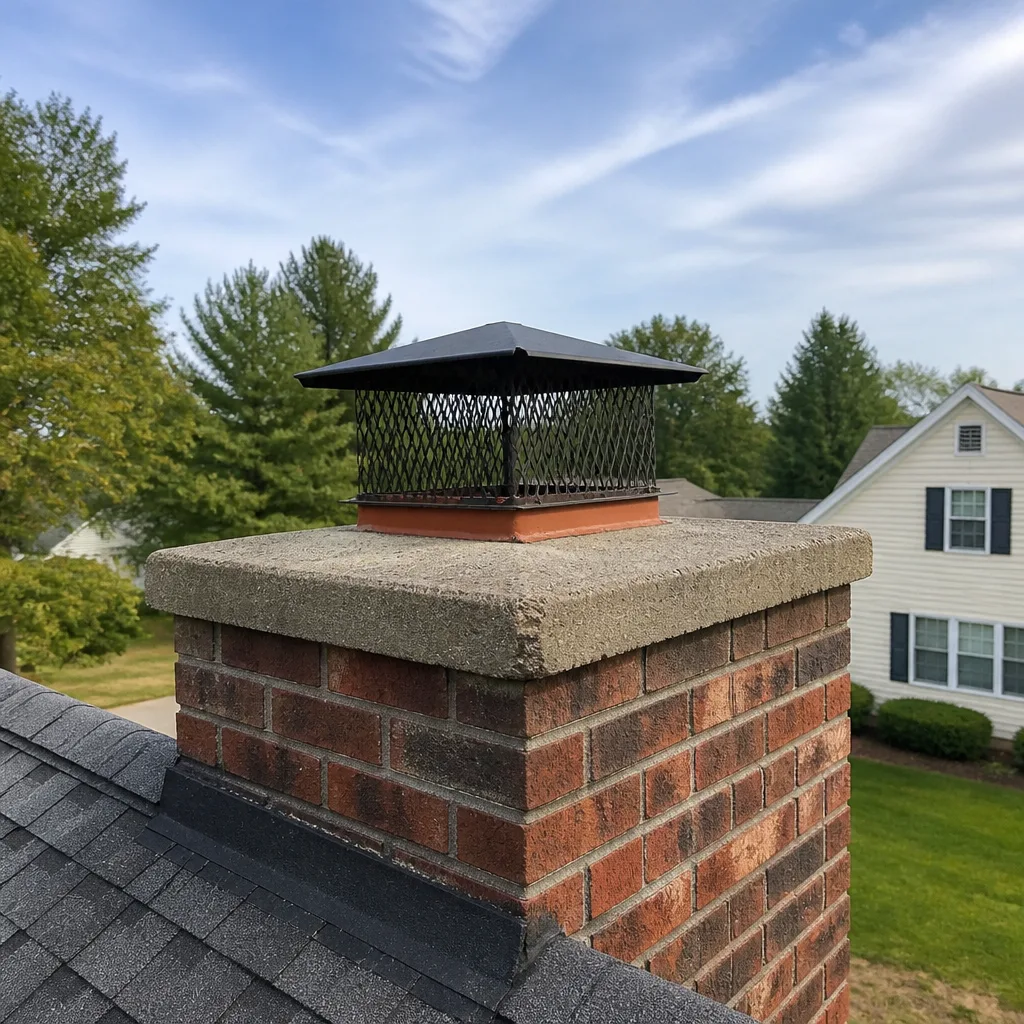
- The crown. The crown is the concrete cap on top of the chimney. If it’s cracked or pulling away from the brick, water gets in and works its way down every time it rains. A failed crown is a leading cause of the moisture damage below it.
- Mortar joints. Look at the joints between the bricks. If you can scrape out mortar with a key or a small tool, or if the joints look recessed and dark, they’re failing.
- Spalling brick. Look for brick faces that have popped off or are flaking. A spalled face usually shows a lighter colored core underneath. That’s a frost-and-moisture problem, not just age.
- Flashing. The metal that seals the chimney to the roof. If it’s loose, rusted, or the sealant is cracked, water comes in at the roof line.
- Leaning or a visibly shifted chimney. A chimney that’s out of plumb needs a structural assessment, not a patch.
- Damper and firebox. A rusted damper is a sign moisture is getting in, even if the outside looks fine.
If the crown is cracked and the mortar is soft, you’re looking at a moisture problem that’s been going on for more than one season. That’s the point where we recommend a proper repair rather than another coat of sealer. On Evanston’s older housing stock, these repairs are routine, and the right materials matter. We use contractor-grade materials like HeatShield for flue tile resurfacing and DuraFlex for relining, because they’re the systems designed to solve the specific problem. When it’s time for a chimney repair, we’ll show you the reason for it. Local building codes generally require a permit for structural chimney repair, so ask your city’s building department before work starts.
Step-by-Step Troubleshooting Sequence
When a homeowner calls us with a chimney complaint, this is the sequence we work through. It starts with the simplest, least expensive checks and moves toward the camera only when the simple answers are ruled out.
- Describe the symptom. When does it happen: on every fire, only on cold or windy days, or when the fireplace is off? That single answer points to a performance problem, a structural problem, or a draft issue.
- Confirm the cap and top of the stack. We check that the cap is intact, correctly sized, and not blocked by a nest or debris. This is the most common and simplest fix for smoke backing up.
- Check the stack height and roof clearance. If the flue doesn’t clear the roofline properly, or sits in the lee of a taller section, draft suffers. Height correction is often the answer.
- Sweep the flue. Only after the draft and structure are understood do we clean. This step clears creosote and confirms what a normal fire has been doing to the flue.
- Run a Level 2 camera inspection. If the problems persist or the answer isn’t obvious, a camera inspection shows the flue tiles, the joints, and any gaps. This is the step that confirms a structural cause, like a cracked tile or a failed joint.
- Confirm the fix in writing. Every recommendation comes with the evidence that justifies it, and the final price is set by the written estimate before any work is scheduled.
This sequence is why we say we inspect before we sweep. If we swept first and asked questions later, we’d be guessing at the cause and selling a cleaning that doesn’t solve the problem. A sweep is a starting point. A safe chimney is the goal.
Common Mistakes to Avoid
- Assuming a dirty flue is the cause of smoke backing up. A dirty flue is rarely the cause of backdraft. Rule out cap, height, and airflow first, or you’ll pay for a cleaning that doesn’t fix the smoke.
- Putting a cap on to “keep the rain out” without sizing it. An oversized or wrong cap can choke the draft or create turbulence. Cap sizing is a real design decision, not an accessory.
- Waiting for a chimney to fail until it looks bad from the ground. In Evansville’s wet-freeze cycle, damage starts inside the joints where you can’t see it. A quick up-close look each season is worth more than a repair later.
- Smelling a chimney in summer and assuming it’s a fire hazard. The smell could be creosote, an animal nest, or negative pressure. Each has a different fix, and guessing wastes money.
- Sealing over a cracked crown or failed mortared joint. A coat of sealer hides the problem without solving the moisture path. Water gets in through the crown and out at the firebox.
- Taking “you need a full relining” on faith. A repair should come with camera evidence you can see. If a contractor won’t show you the flue, get a second opinion.
- Forgetting the firebox and damper. A rusted damper or a cracked firebox wall is a sign of moisture intrusion that starts outside, not inside. Look at the whole system, not just the top.
See the difference
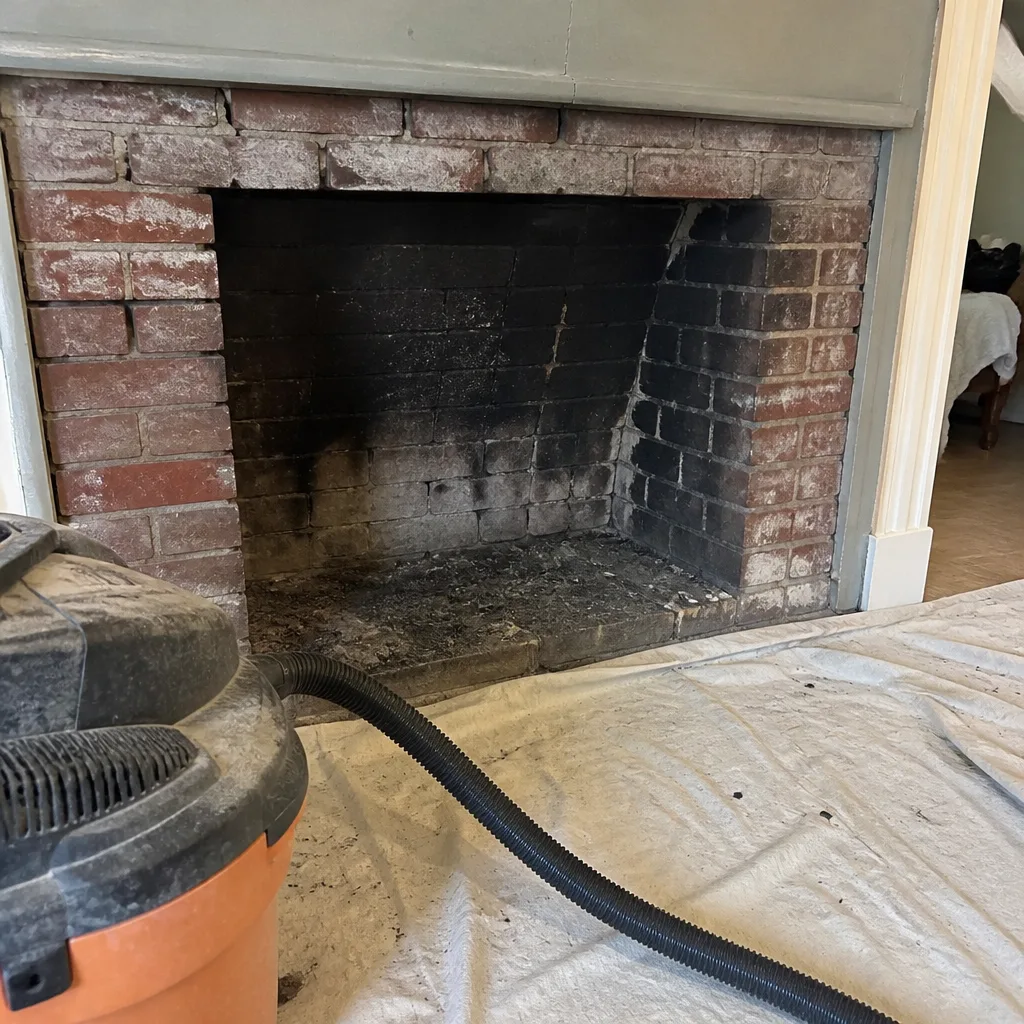 Before
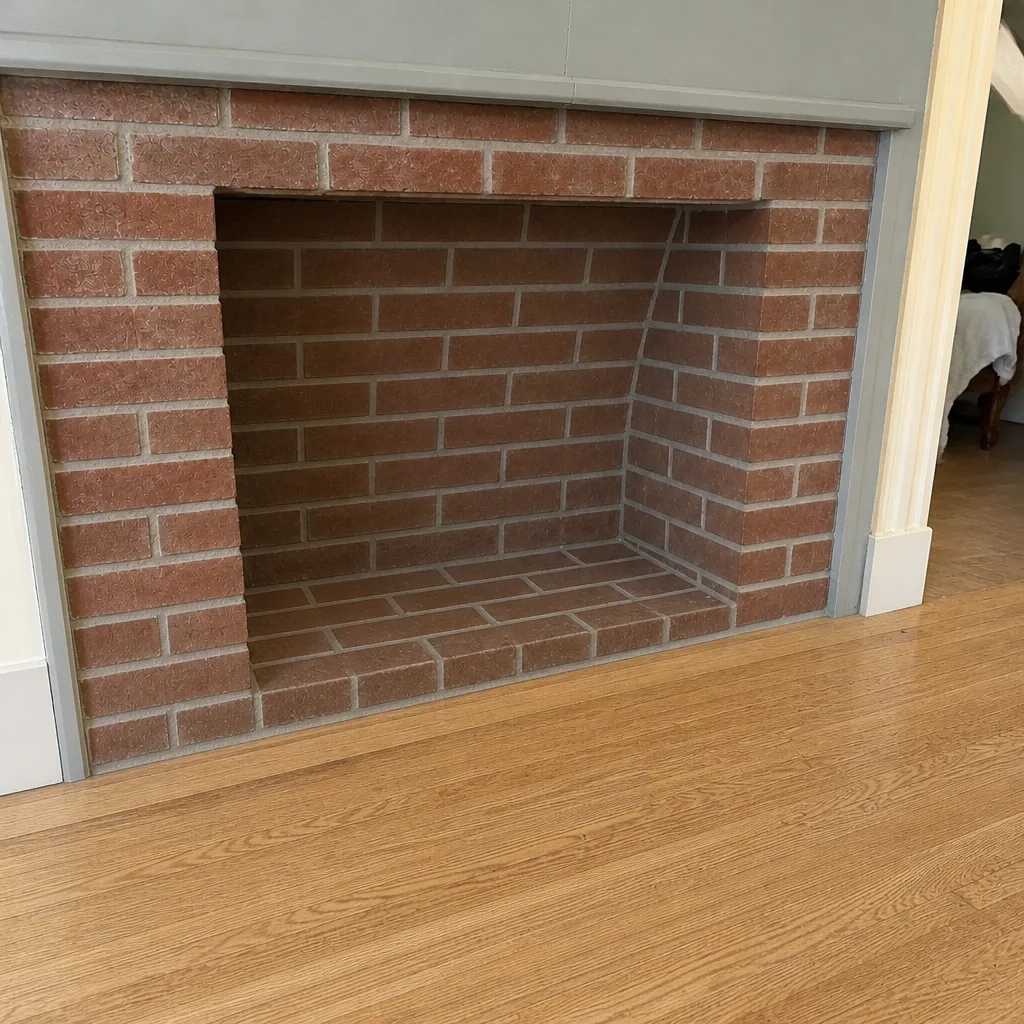 After
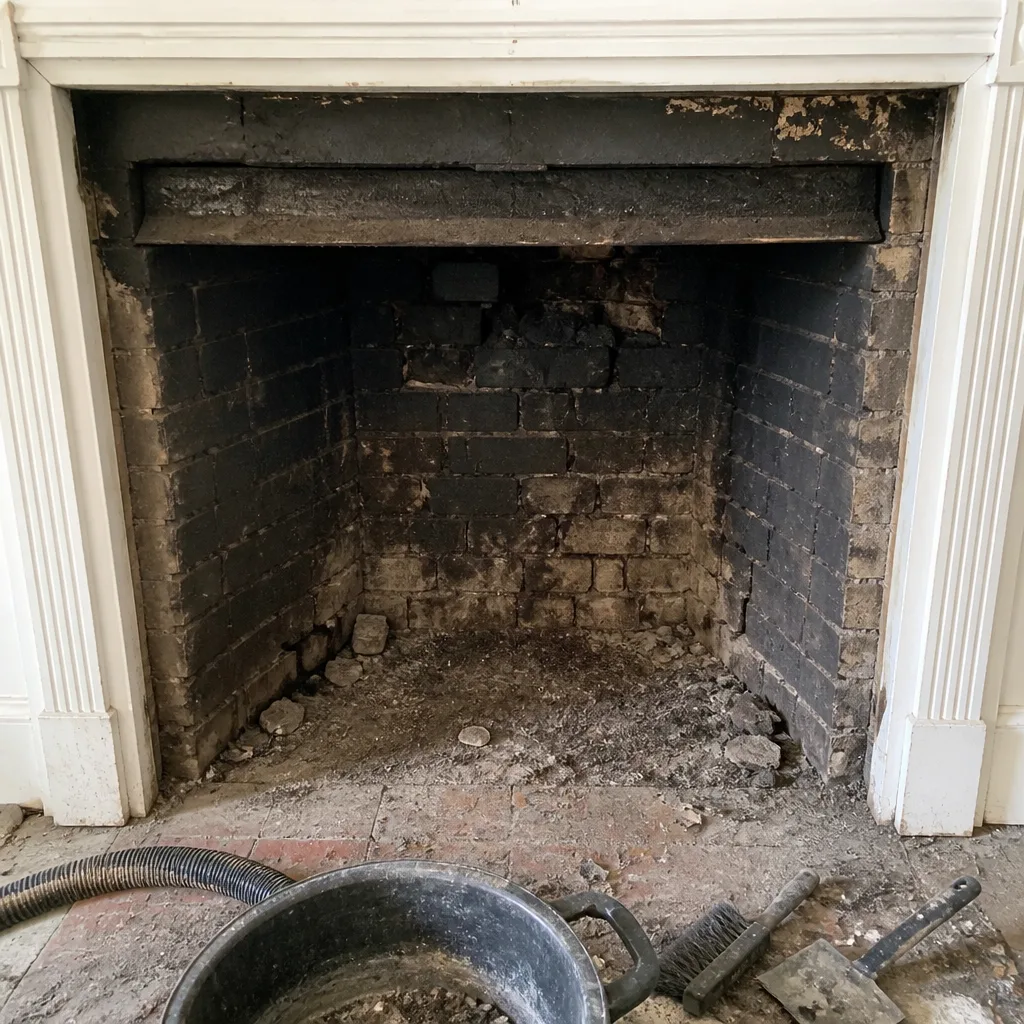 Before
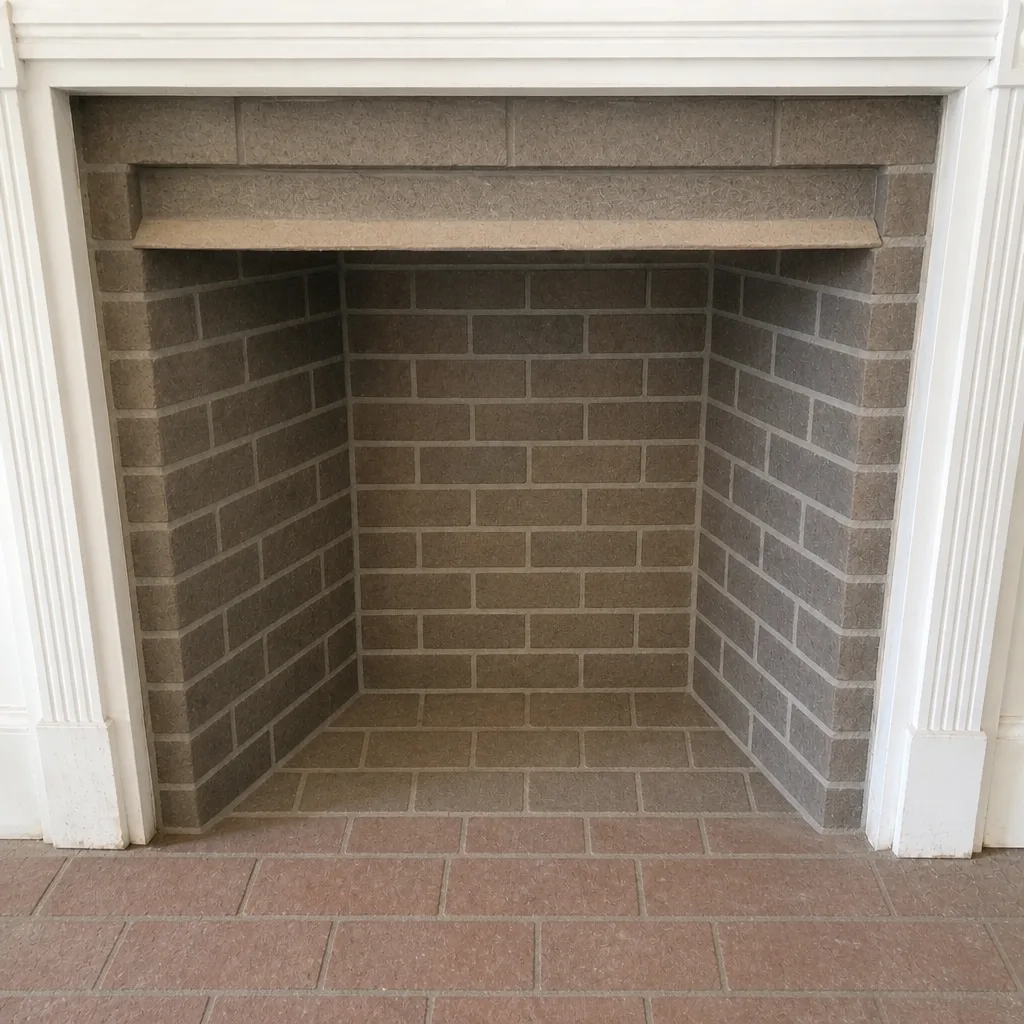 After
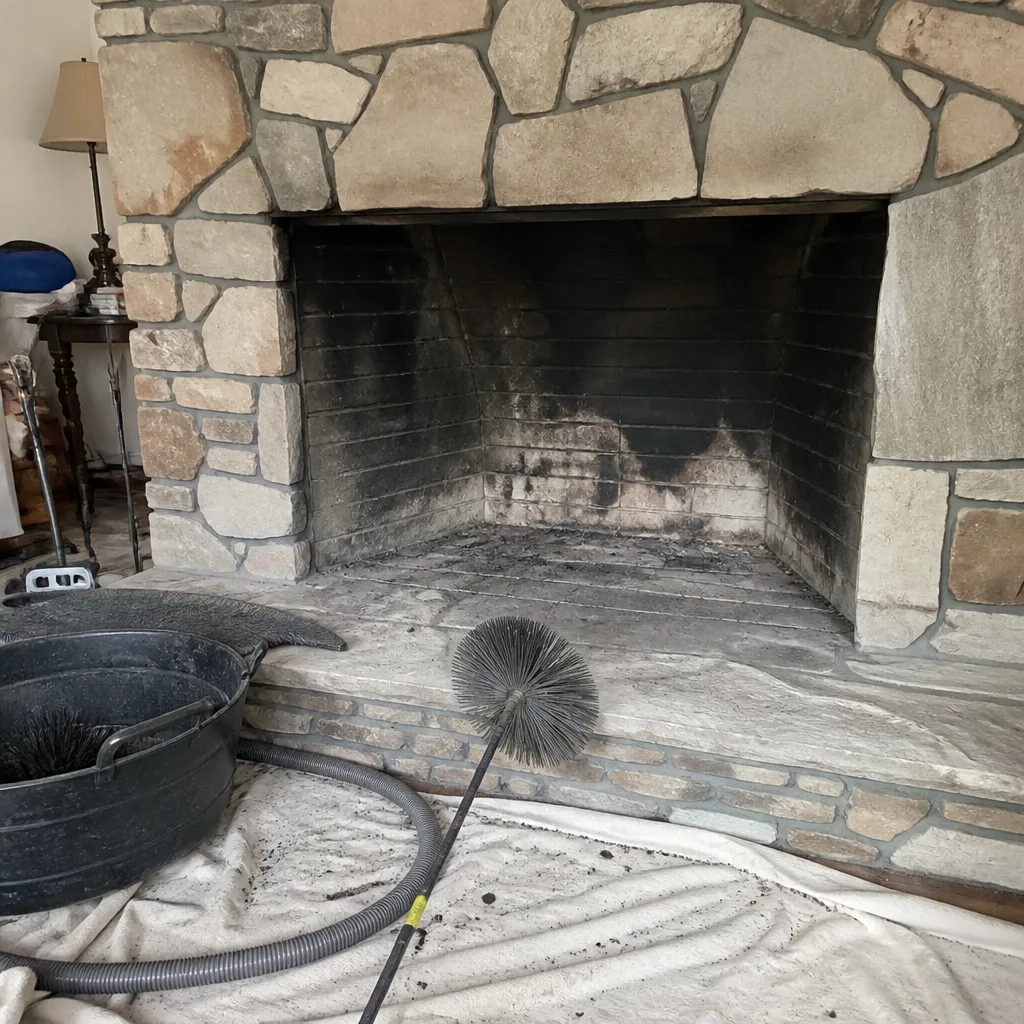 Before
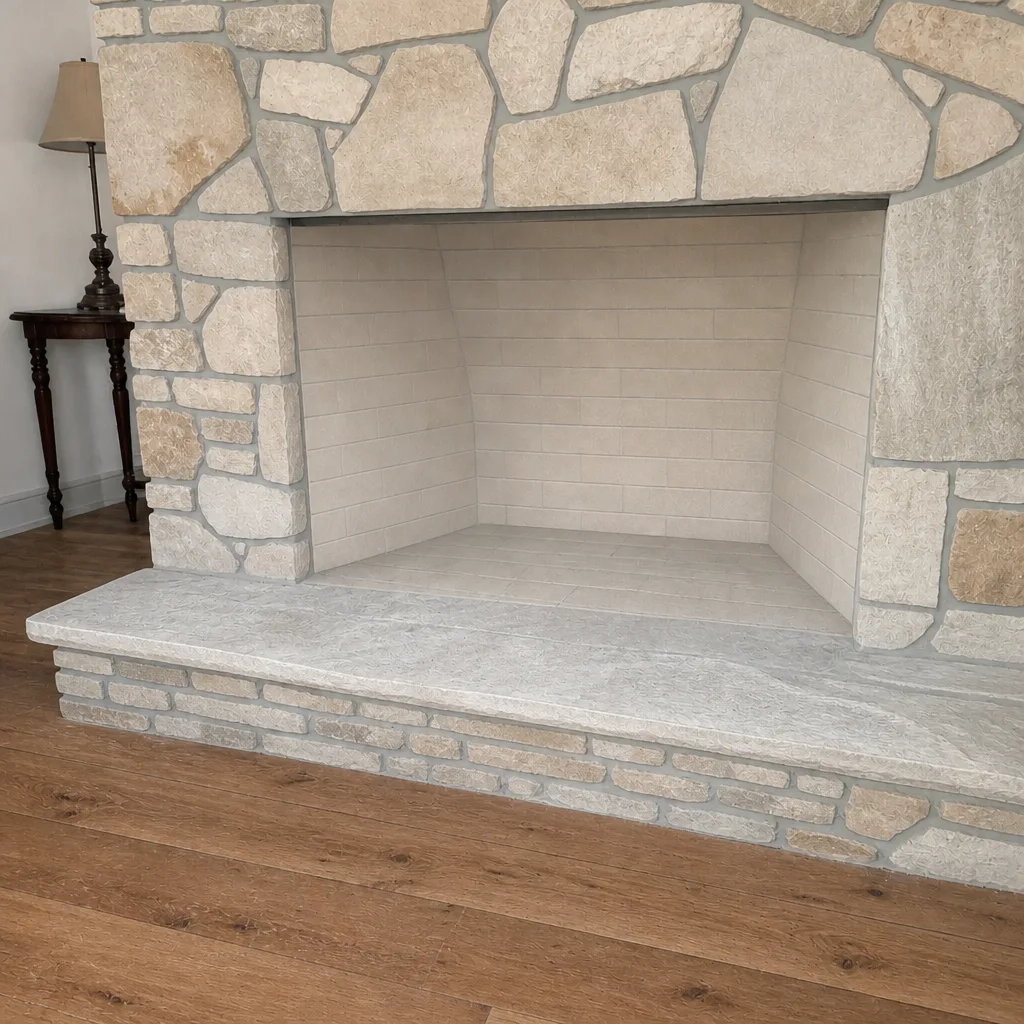 After
When to Call a Professional
Call a professional when smoke rolls into the room on every fire, when a camera inspection hasn’t confirmed what’s going on, or when you see cracked flue tiles, spalling brick, or failing mortar. Also call if you smell gas near a gas fireplace, if the damper won’t open, or if the chimney has visible cracks or a loose crown. These are the problems that don’t get better with time. We inspect before we sweep so the next step is based on what’s actually in the flue, not a guess. Chimney Sweep Evansville offers free estimates in Evansville. Call (833) 365-6875. We answer 24/7, with fast dispatch from 7am to 7pm, Sunday through Friday. Our technicians have up to 13 years of experience with the inspection, sweep, and repair cycle, and we’ll tell you in plain language what we find and what can safely wait.
Frequently Asked Questions
Because a sweep cleans the flue, and cleaning doesn’t change draft, cap sizing, stack height, or the flue-to-firebox ratio. Backdraft is usually one of those, and it needs diagnosis, not another cleaning. Call (833) 365-6875 for an exact quote. Estimates are free.
It usually means creosote, which smells strongest in warm, humid weather. If the smell is musky, suspect an animal nest. If it’s cold and musty and appears on windy days or from early fall, negative pressure is likely. Each has a different fix, so the smell itself is the first clue.
Normal aging means hairline mortar cracks and faded color. Damage means crumbling mortar, spalling brick, a cracked crown, or water stains inside. If you can’t tell from the ground, a Level 2 camera inspection shows the flue in detail. Call (833) 365-6875 for an exact quote. Estimates are free.
The Ohio River valley alternates humid summers with freezing winters, so water soaks into masonry, freezes, and pries open joints season after season. That’s what causes spalling and deteriorated mortar. It’s a moisture cycle problem, not simply age.
If you’re having smoke or draft problems, you need the camera, because cleaning doesn’t diagnose those. If the chimney’s been quiet and you just want routine maintenance, a sweep plus a look at the flue is the starting point. Call (833) 365-6875 for an exact quote. Estimates are free.
Creosote builds up in the flue and raises fire risk, and moisture keeps working on the mortar and tiles from the inside. Several seasons of that can turn a simple sweep into a repair, or a repair into a relining. A chimney that’s been watched is cheaper to keep than one that hasn’t.
The Bottom Line
Chimney problems break down into performance issues and structural issues, and each has its own fix. Smoke bothering your fire is usually a cap, height, or pressure problem, not a dirty flue. Odor depends on whether it’s creosote, animals, or negative pressure. Evansville’s humid, freeze-prone climate is what accelerates mortar damage and spalling, and a quick walk-around each season catches it before it becomes a repair. The main takeaway is this: get a diagnosis before a cleaning, see the camera evidence before any repair, and don’t guess. If you’re not sure what you’re looking at, that’s what we’re here for. Call (833) 365-6875 for a free estimate. We answer 24/7, with fast dispatch from 7am to 7pm, Sunday through Friday.
Written by the team at Chimney Sweep Evansville.