
Last updated November 15, 2026
 Sweep & inspection
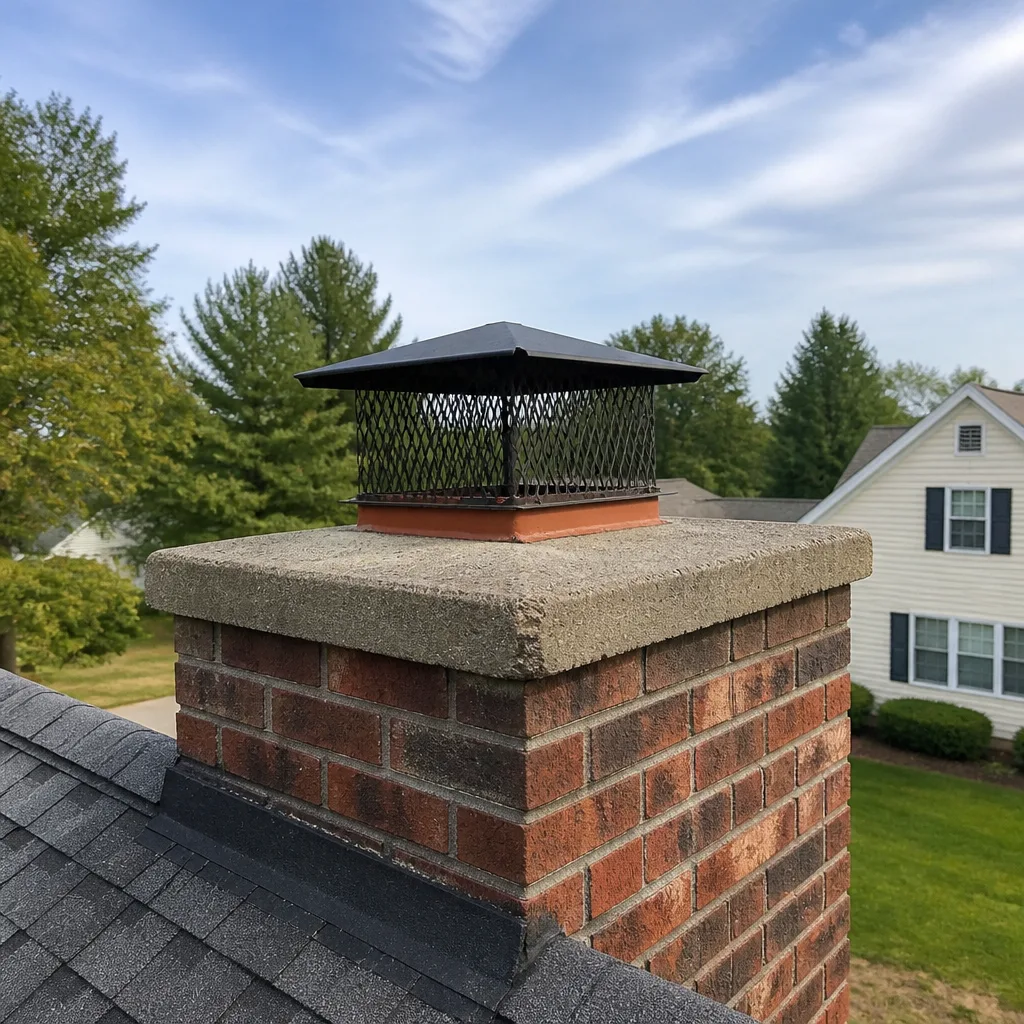
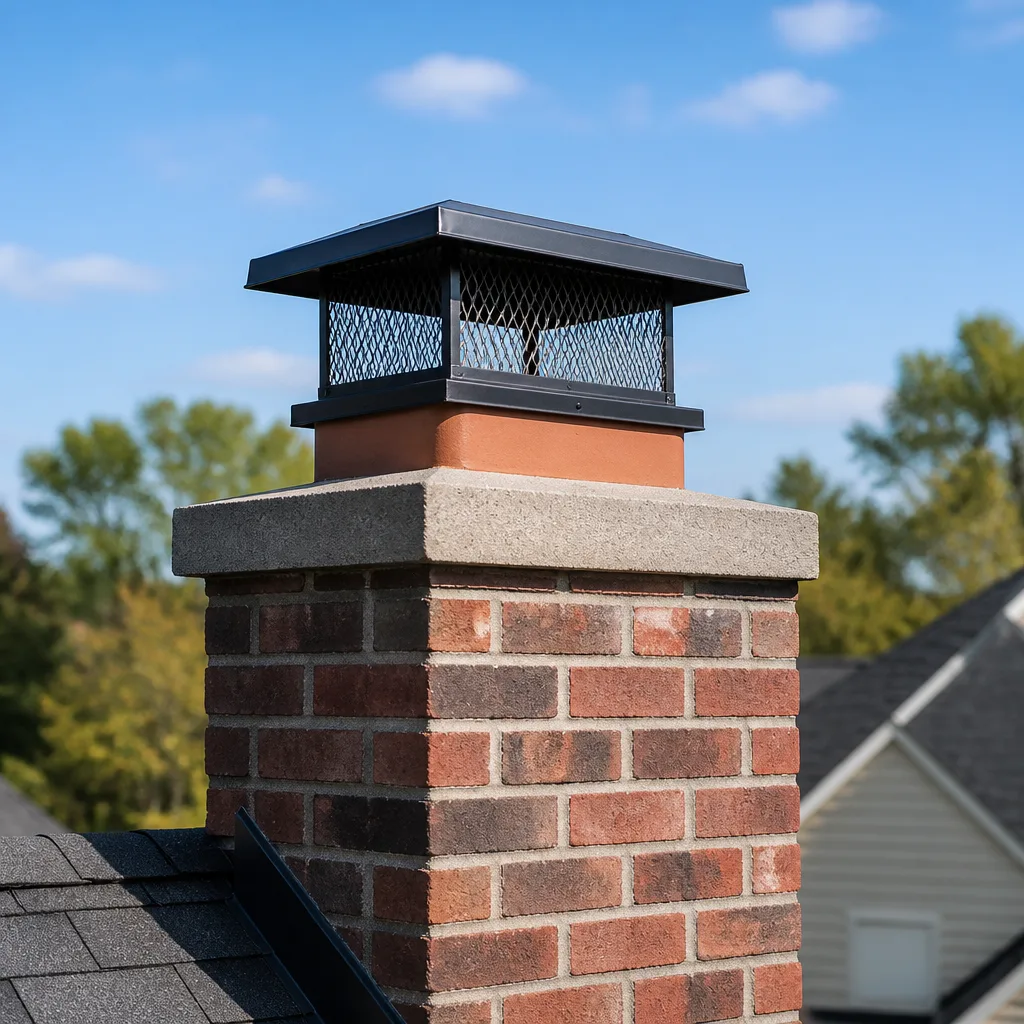 Caps & crowns
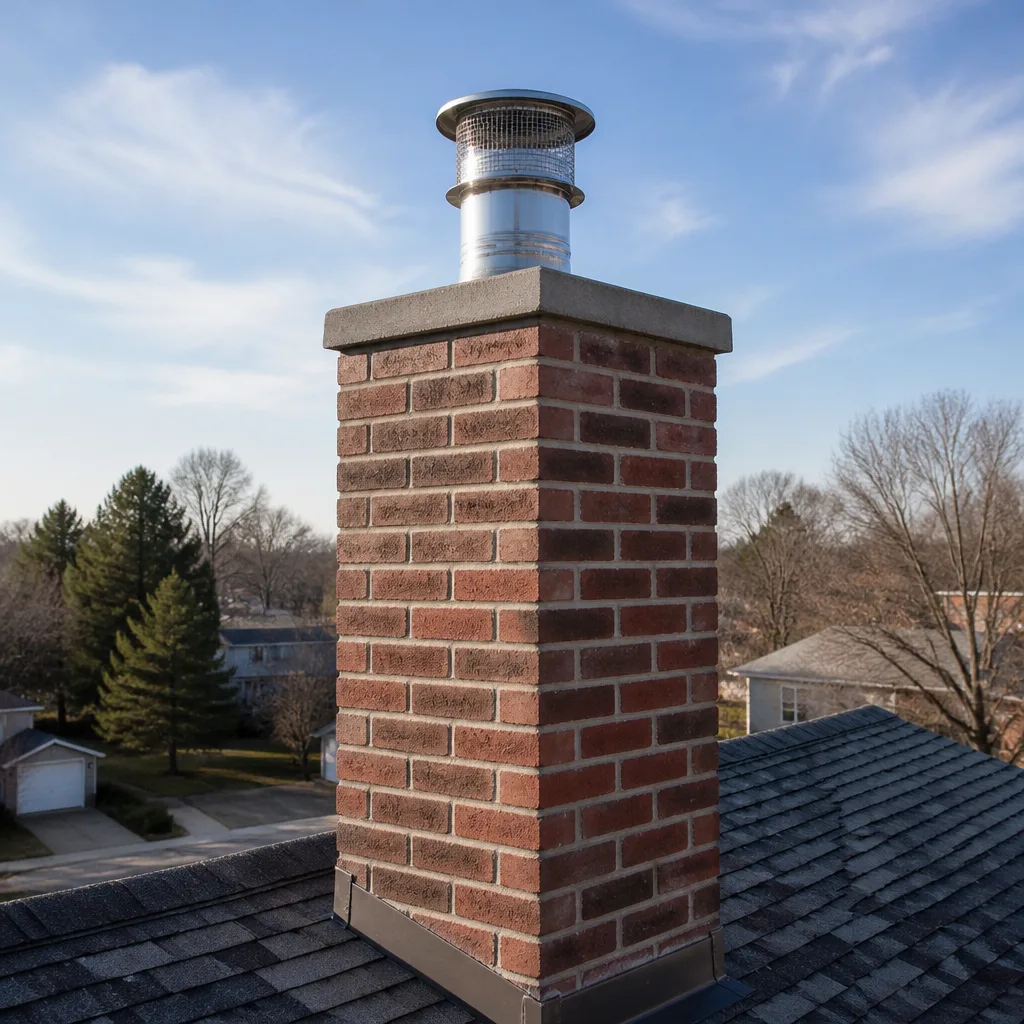 Flue relining
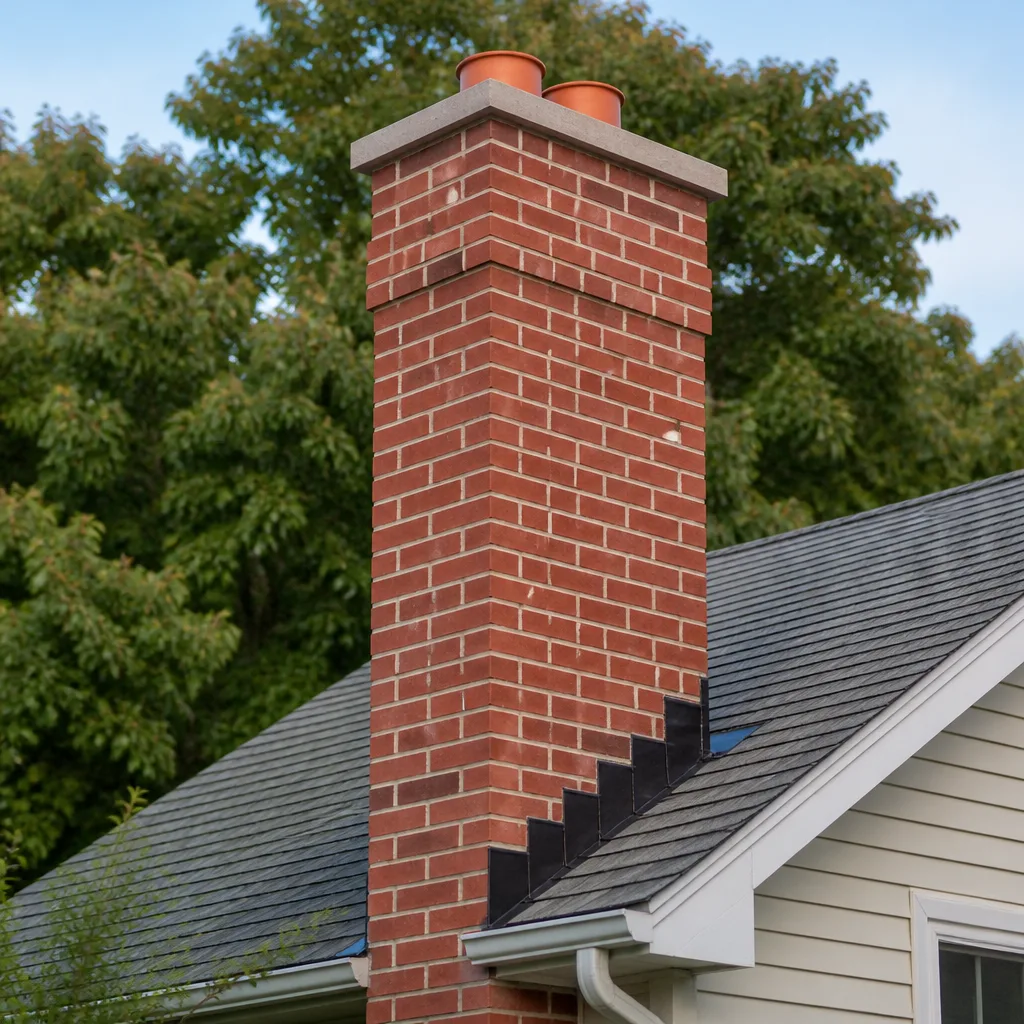 Masonry repair
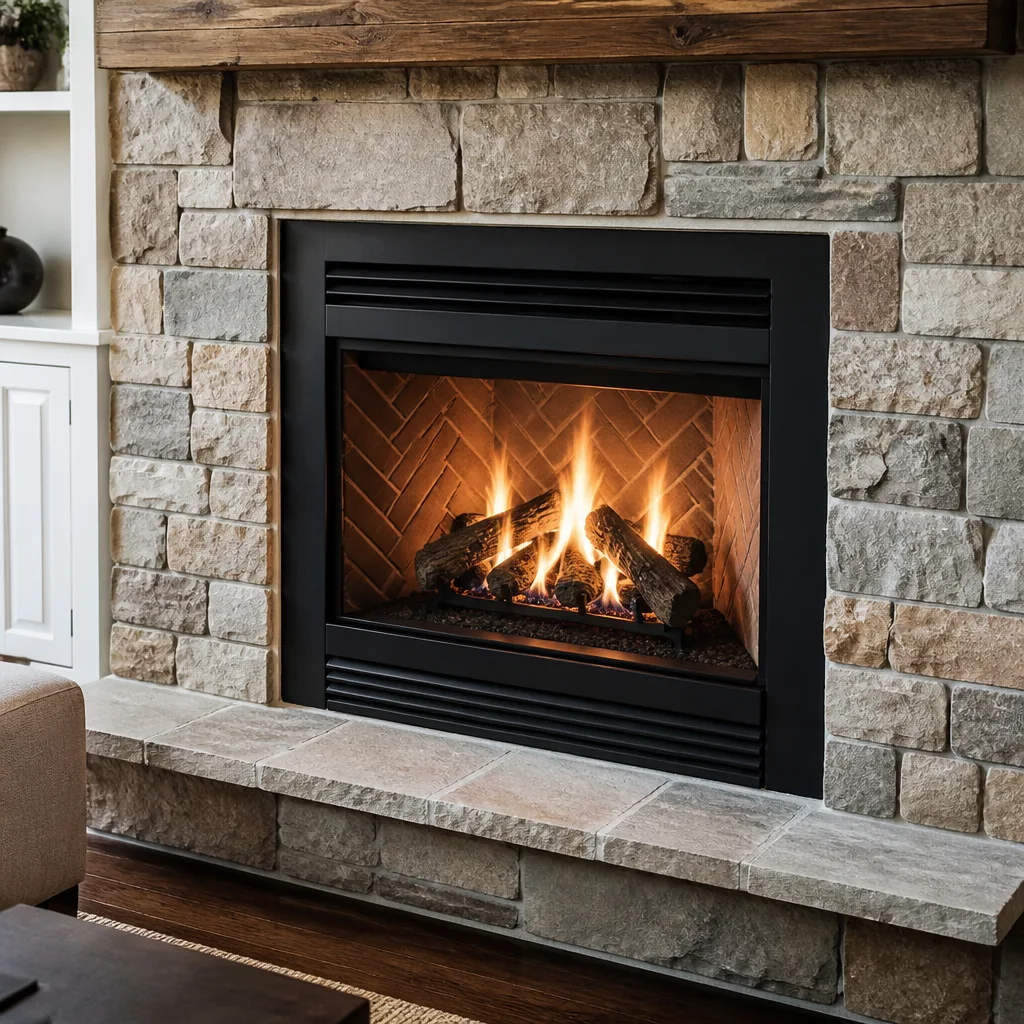 Gas fireplace service
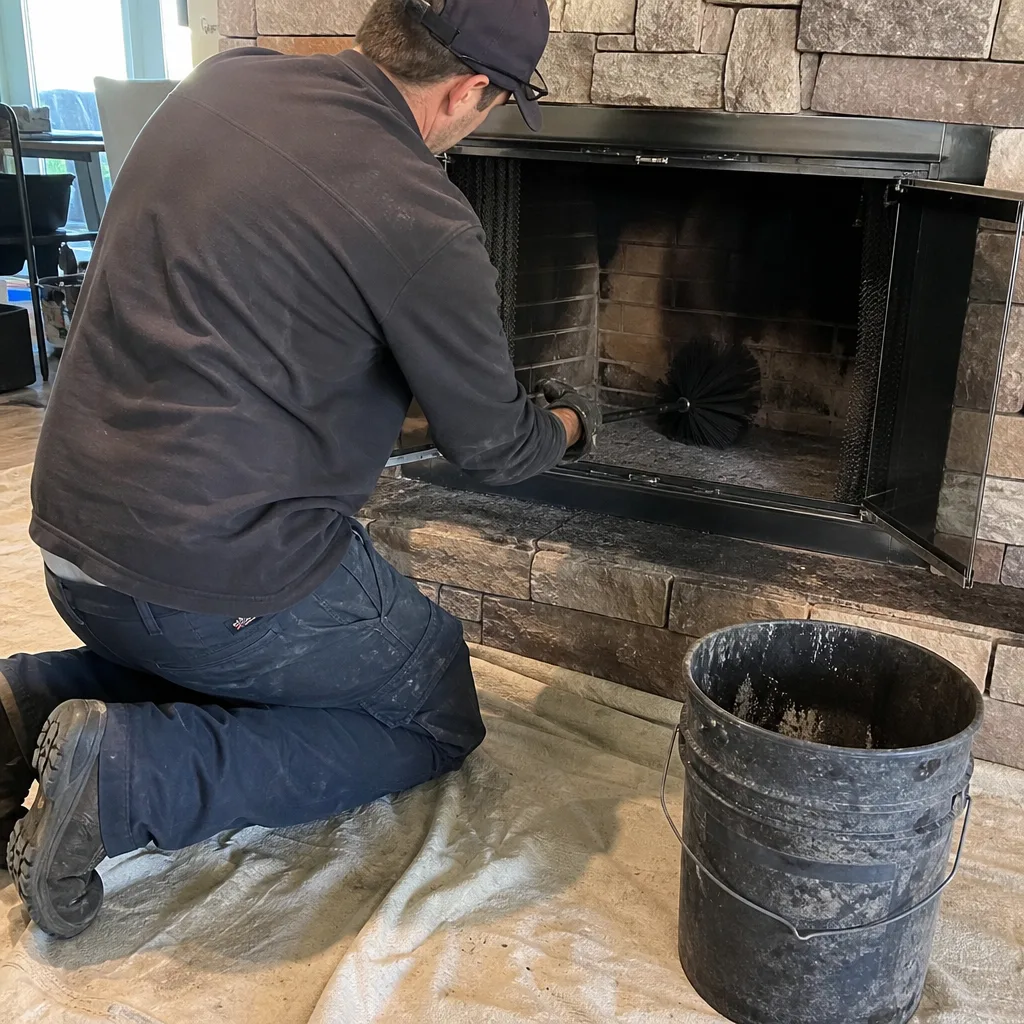
Level 1 sweep and inspection to the NFPA 211 annual standard - flue, crown, cap, and flashing checked and photographed
Chimney sweep logs do not sweep chimneys. They loosen some creosote - which then falls where a brush and vacuum still have to collect it.
Seasonal Chimney Cleaning Care for Evansville: Year-Round Homeowner’s Guide
Most homeowners treat the chimney like a smoke detector: forget about it until something goes wrong. Late summer is the worst possible time to discover a cracked flue tile, but it’s also the cheapest time to fix one – before every chimney company in Evansville is booked into November. The chimney isn’t a seasonal appliance, either. It’s a masonry and metal structure that expands, contracts, absorbs water, and dries out with every shift in the weather, and southwestern Indiana puts it through all four seasons with real force. This guide walks you through what each season does to your chimney system, what to check when, and how to schedule service so you’re never the person calling in October for a sweep you needed in June.
Quick Answer
Chimney care in Evansville is a four-season job, not an annual appointment. Schedule your sweep and inspection in late summer, before heating season demand spikes and scheduling tightens, then use fall, winter, and spring to watch for the specific damage each season causes – freeze-thaw cracking in winter, water intrusion and humidity damage in summer, and mortar and cap wear in spring. Seasonal attention prevents the expensive repairs that show up when you finally light the first fire of the year.
Styles & brands we work with
- Sweep & inspection
- Caps & crowns
- Flue relining
- Masonry repair
- Gas fireplace service
Table of Contents
- Why Seasonal Chimney Care Matters in Evansville
- Spring: The Post-Heating-Season Check
- Summer: Humidity, Masonry, and the Water-Repellent Window
- Late Summer: The Best Time to Book Your Sweep
- Fall: Preparing for the First Fire
- Winter: Freeze-Thaw, Creosote, and What to Watch
- Wood-Burning vs. Gas: How They Age Through the Same Cycle
- A Year-Round Chimney Care Calendar
Why Seasonal Chimney Care Matters in Evansville
A chimney in a mild climate mostly deals with one thing at a time. A chimney in Evansville deals with all of them. Our winters swing above and below freezing repeatedly, which is the single most damaging pattern for masonry. Our summers are humid enough that a brick chimney can hold moisture for days after a rain. And our springs and falls bring the temperature swings that crack mortar joints and loosen chimney caps before anyone notices.
That’s why the annual “call the sweep in October” habit misses so much. The chimney you light in October has already been through eight months of weather since you last used it. The mortar joint that cracked in February, the crown that spalled in July, the cap that shifted in an April windstorm – those are all waiting for you when heating season starts. The question is whether you find them on your terms in late summer, or on the coldest night of the year when smoke starts backing into the living room.
At Chimney Sweep Evansville, we treat seasonal care as a way of seeing the system, not a sales pitch. Each season stresses a different part of the chimney. Knowing which part to look at when changes how you schedule service, what you check yourself, and when it’s time to make the call.
Key Takeaways
- Evansville’s freeze-thaw winters attack mortar joints and crowns more aggressively than a uniformly cold climate would.
- Late summer is the ideal scheduling window – supply of available appointments is highest and repair work can finish before heating season.
- Spring checks catch winter damage while it’s still cheap to fix.
- Summer humidity is the masonry chimney’s biggest hidden enemy, and it’s the best season for water-repellent treatments.
- Wood-burning and gas chimneys age differently through the same seasonal cycle, and each needs its own inspection focus.
Spring: The Post-Heating-Season Check
Spring is when the chimney tells you what winter did to it. Once you stop burning for the season, the system has just been through months of heating, cooling, and freezing, and the cracks and gaps are as visible as they’ll ever be. This is the check most homeowners skip, and it’s the one that catches problems while they’re still small.
What to look at once the fireplace goes cold for the season:
Exterior masonry
- Walk the outside of the chimney and look for cracked or crumbly mortar joints, especially near the top.
- Check for spalling – brick faces flaking off in thin layers – which is a sign of moisture working through the masonry.
- Look at the chimney crown, the concrete cap at the very top. A crown with visible cracks will let water straight into the flue.
Interior signs
- Shine a flashlight into the firebox and up the flue and look for white chalky staining, which indicates water intrusion.
- Check around the damper for rust or dampness.
- Look for any staining on the ceiling or wall near the chimney, which can signal a hidden leak.
Spring is also when we find the freeze-thaw damage from winter. In our experience, a joint that cracked in January is still a small repair in April. By September, water has been working into that crack for five more months, and the masonry around it often needs more work than the original crack did. Catching it in spring is the difference between a quick fix and a larger one.
If you spot anything on the checklist that worries you, a spring chimney inspection lets a specialist look at the whole system before the repair becomes urgent. It also gives you a documented record of the chimney’s condition heading into summer, which matters if you’re selling a home or your insurer asks for proof of maintenance.
Summer: Humidity, Masonry, and the Water-Repellent Window
Here’s a fact that surprises a lot of Evansville homeowners: summer can be harder on a masonry chimney than winter is. Bricks and mortar are porous. They soak up moisture from humid air and from every rainstorm, and our summers give them plenty of both. Masonry that stays damp on the inside for months will slowly break down, and the damage shows up much later, usually during the next winter’s freeze.
That’s why summer is the right season for moisture-control work. If your chimney masonry has been tested and shown to absorb water, a water-repellent application makes sense once the surface is thoroughly dry. The window matters: applying a repellent to masonry that’s still holding moisture traps the water inside, which causes the exact spalling and cracking the treatment was supposed to prevent. A specialist who understands masonry will check moisture content before recommending any application, and will tell you to wait if the conditions aren’t right.
What summer care looks like for a chimney in Evansville:
- Look for persistent dampness. Dark patches on the exterior masonry that don’t dry after a few days of clear weather are a sign the brick is holding water.
- Check the crown and cap. These are the two places where water gets in most easily. A cracked crown or a rusted-out cap lets rain hit the flue directly.
- Confirm the flue is capped. An uncapped flue takes in rain, leaves, and the occasional bird. A proper cap with a spark screen is a basic piece of protection.
- Let masonry dry before any treatment. A water-repellent application works only when the surface is dry.
The cap deserves a little more attention in summer. It’s the first line of defense for the flue, and it’s often the first thing we replace on an older chimney. A cap we install from a brand like Olympia Chimney is sized to fit the flue and screened to keep out animals while letting smoke and gases escape cleanly.
Summer is also the time to address any chimney repair that was flagged in spring. The work can happen in good weather, the masonry cures in warm conditions, and everything is finished before heating season. Trying to squeeze that same repair in during November, when the schedule is packed, is harder on everyone involved.
Late Summer: The Best Time to Book Your Sweep
If you take one thing from this guide, take this: book your chimney sweep in late summer, not fall. Late summer is the sweet spot. The weather is still warm enough for exterior repair work. The early rush hasn’t started. And there’s enough time left before the first fire to handle anything the sweep turns up, which saves you from discovering a cracked flue tile in the coldest week of the year.
By the time October arrives, the schedule tightens across the whole trade. Homeowners who waited until the first cold snap now all want service in the same few weeks, and repair work that should have been done in August gets pushed toward winter. A late-summer chimney sweep avoids that entirely.
What to expect when you book in late summer:
- You get a sweep plus an inspection. We inspect before we sweep, so you know exactly what’s up there. The sweep clears what’s built up; the inspection tells you what condition the flue is in.
- You see what we see. A camera inspection with a photo report means you’re not taking anyone’s word for a problem. You see the flue, the liner, and any cracks or gaps for yourself.
- You get a written estimate if repair is needed. If the inspection turns up a problem, the price is set per job by the written estimate, so you know the scope and cost before anything begins.
- Repairs can happen before heating season. Anything you need fixed has time to be scheduled and completed with no pressure.
One more reason late summer works well: creosote. The soot and creosote that build up over a heating season sit in the flue all summer, and creosote is the fuel behind most chimney fires. Clearing it before heating season starts means you begin the season with a clean flue rather than one that’s been quietly accumulating buildup for months. The guide on chimney fire safety covers creosote stages and what makes buildup dangerous.
Fall: Preparing for the First Fire
Fall is the season for the things you can control before heating season starts. By now, ideally, your sweep and inspection are done. Fall is about confirming the small details and paying attention to how the chimney performs on the first few fires, because that performance tells you a lot.
Fall checklist for an Evansville chimney:
- Confirm the damper opens and closes smoothly. A damper that sticks or won’t close can let warm air escape and cold air in all winter.
- Check that the cap is secure. Fall windstorms in southwestern Indiana can knock a loose cap askew. A cap that’s shifted can block the flue or let debris in.
- Clear the chimney area of anything flammable. The space around the hearth and firebox should be clear of decorations and stored items, especially with holiday decorations on the way.
- Have wood ready and seasoned. Dry, seasoned firewood burns cleaner and produces less creosote than green wood. Wet wood is one of the biggest hidden causes of creosote buildup.
- Watch the first fire closely. Smoke backing into the room, a fire that’s hard to start, or a noticeable smell are all signals to get a professional look before you keep burning.
We’ve seen the same pattern many falls: a homeowner lights the first fire, notices smoke rolling out of the firebox, and calls. Often the cause is a blocked or undersized flue, or just a flue that’s cold and needs a warm-up. But sometimes it’s a crack or a collapsed tile that wasn’t caught in a sweep. The first fire of the season is the right time to be attentive, because it’s the first time the whole system has been tested since spring.
Winter: Freeze-Thaw, Creosote, and What to Watch
Winter is when Evansville’s climate does its most specific kind of damage. Our winters aren’t simply cold; they swing back and forth around the freezing mark, often several times over a season. When water gets into a hairline crack in a mortar joint and then freezes, it expands. When it thaws, it leaves the crack a little wider. Repeat that cycle a few times and a tiny crack becomes a real one.
That’s freeze-thaw, and it’s why a small crack you ignored in the fall can be a much bigger problem by March. The parts of a chimney most exposed to it are the mortar joints, the crown, and the top few courses of brick, because those are the areas that get the most water and the most direct freeze. During heating season, the flue also creates a temperature difference between the inside of the chimney and the outside, and that adds additional stress to the masonry.
Winter watch list:
- Creosote buildup. Every fire adds creosote, and a flue that wasn’t swept before heating season fills faster. If you burned heavily and didn’t get a sweep, midwinter buildup is worth a check.
- Visible masonry cracks. Cracks that appear or widen in winter usually mean water is getting in and freezing. Spring is the time to fix them, but note them now.
- Chimney fire warning signs. A loud roaring, a lot of smoke, or a smell of burning that seems to come from the chimney can indicate a chimney fire. Treat that as an emergency and get a professional inspection before using the fireplace again.
- Carbon monoxide. Any fuel-burning appliance, including wood and gas, can produce carbon monoxide if the flue is blocked or venting fails. A working carbon monoxide alarm on every level of the home is basic safety, and it’s especially important in winter when the chimney is working hardest. A cracked or blocked flue can’t be seen from the room, which is why the alarm matters.
Safety here is worth being direct about. A chimney is not a part you can safely inspect by eye from below. The flue tiles, the liner, and the crown are out of reach and out of sight, and the damage they carry is exactly the kind that doesn’t announce itself. That’s why we recommend a trained professional for anything involving the flue or the masonry structure, and it’s why our visits include a camera inspection with a photo report. You shouldn’t have to trust a verbal description of a problem you can’t see.
Wood-Burning vs. Gas: How They Age Through the Same Cycle
Your wood-burning fireplace and your neighbor’s gas insert go through the same Evansville seasons, but they wear very differently. Wood-burning chimneys deal with creosote, the byproduct of burning wood that accumulates on the flue walls. Gas appliances don’t produce creosote the way wood does, but they do produce moisture and acidic condensation, and their venting systems age on their own timeline. If you have a gas insert or a gas log set in an older fireplace, it’s worth understanding which system you have and how it ages.
How a wood-burning chimney wears through the seasons
- Winter: peak creosote production, plus freeze-thaw stress on the exterior masonry.
- Spring: creosote sits in the flue through the off-season; early checks catch masonry cracks while they’re small.
- Summer: the flue is idle, but the masonry takes in moisture. Creosote can harden and become harder to remove if left all summer.
- Fall: sweeping removes the year’s buildup, and the first fires test the whole system.
How a gas appliance chimney wears through the seasons
- Winter: condensation from combustion is the main issue; acidic moisture can attack a liner or flue tile over time.
- Spring: a good time to check the venting and the termination point at the top of the chimney.
- Summer: idle, but the vent should stay clear of debris and animals. A gas appliance vents year-round, so a capped, screened termination matters.
- Fall: confirm the vent is unobstructed before heating season.
The flue itself is the common denominator. Both types of chimney depend on a sound, correctly sized liner, and that liner is what our inspections focus on most. If we find a liner that’s deteriorating, we don’t automatically recommend a rebuild. Sometimes HeatShield resurfacing can restore a damaged flue without demolition, and sometimes a DuraFlex flexible liner system is the right fix for a full relining. Either way, the recommendation follows what the camera inspection shows, and you see the evidence before you decide.
A Year-Round Chimney Care Calendar
Here’s the whole year in one place, so you can plan chimney care around the seasons instead of reacting to a problem when it’s coldest. This is the calendar we work from when we talk with homeowners in Evansville.
| Season | What to Focus On | What It Prevents |
|---|---|---|
| Spring | Post-heating-season inspection, masonry check, cap check | Small winter cracks becoming large summer repairs |
| Summer | Humidity and moisture control, water-repellent preparation, crown and cap repair | Masonry spalling and hidden water damage |
| Late Summer | Sweep and camera inspection, scheduling repair work | The fall booking crunch and October surprises |
| Fall | First-fire test, damper, cap security, seasoned wood | Smoke backup and creosote buildup |
| Winter | Creosote watch, freeze-thaw damage, carbon monoxide alarm | Chimney fires and structural winter damage |
The pattern is simple: inspect in spring, protect in summer, get cleaned in late summer, test in fall, and watch in winter. Every part of the calendar has a purpose, and skipping a season leaves a gap that usually shows up somewhere else.
Common Mistakes to Avoid
- Waiting until October to book a sweep. Everyone does this, which is exactly why late summer is better. You get the appointment you want, and repairs have time to finish before heating season.
- Skipping the spring check. Spring is when winter’s damage is most visible, and a crack caught in April is a small repair. The same crack in October has had five months to worsen.
- Ignoring masonry moisture in summer. A brick chimney that stays damp is a chimney that will spall and crack. Check for persistent dark patches on the exterior after rain clears.
- Applying a water-repellent to wet masonry. The treatment traps moisture if the surface is damp. Wait for dry conditions, and check moisture before applying anything.
- Burning unseasoned wood. Green or damp wood produces more creosote than dry, well-seasoned wood. It’s one of the most common causes of fast buildup.
- Relying on a visual check of the firebox. The flue tiles and liner are invisible from the room. Only a camera inspection shows their true condition – and that matters whether or not you noticed a problem.
- Treating a gas insert as maintenance-free. Gas venting still needs inspection, and a gas appliance that isn’t venting correctly can produce carbon monoxide. The lack of smoke doesn’t mean nothing’s wrong.
See the difference
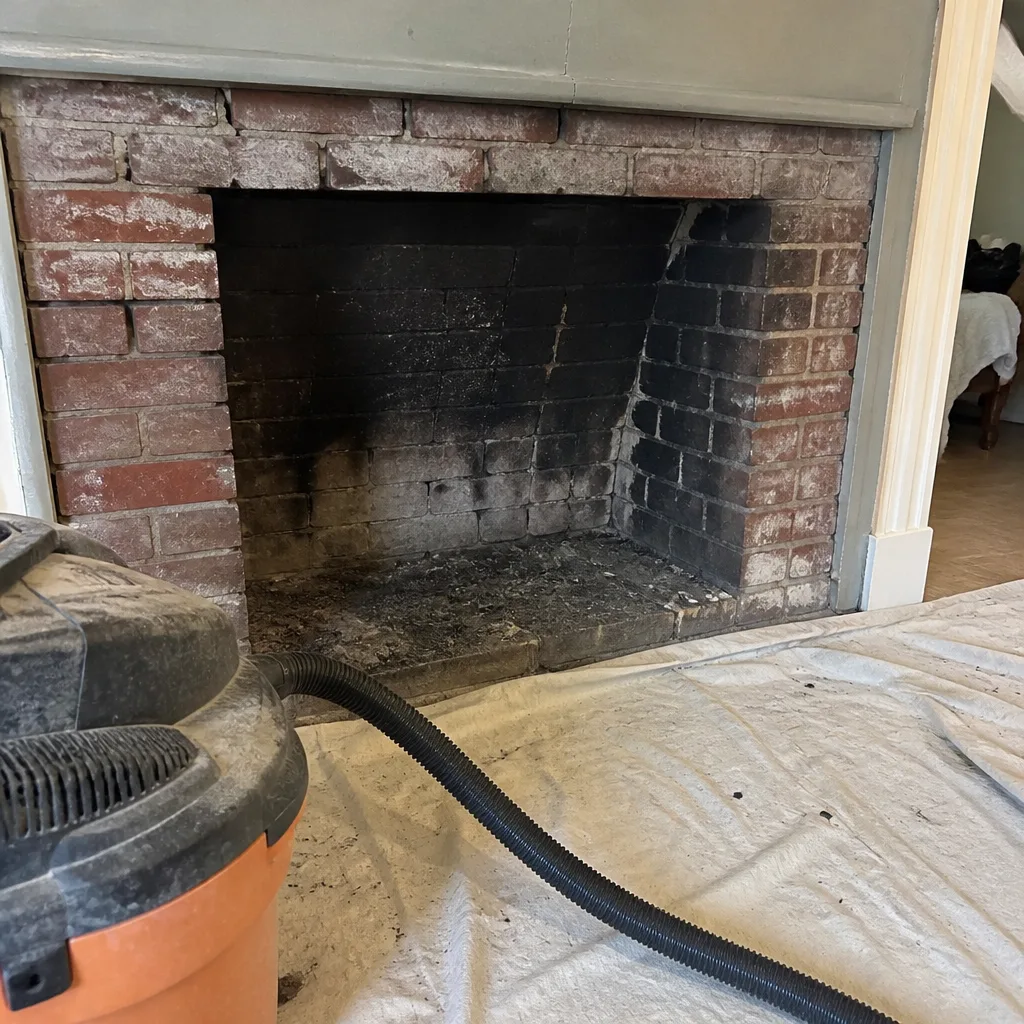 Before
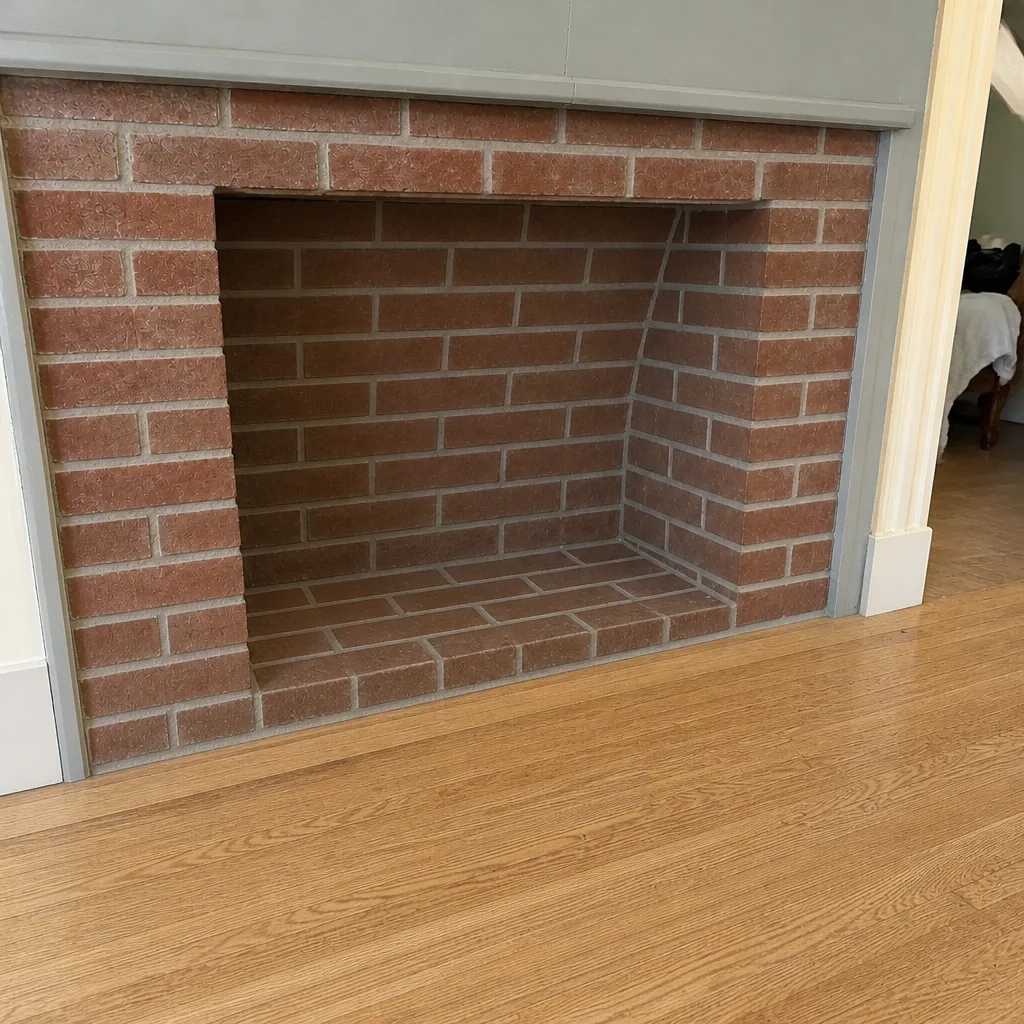 After
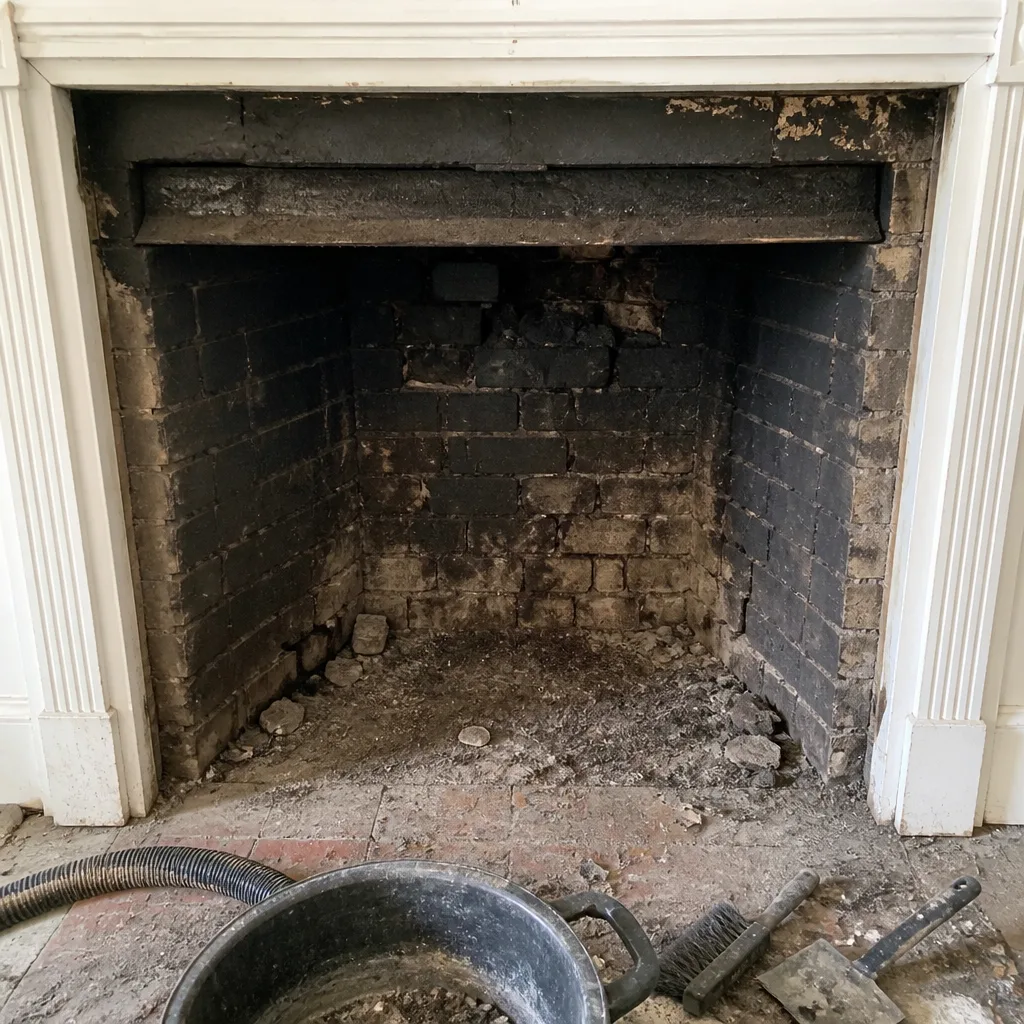 Before
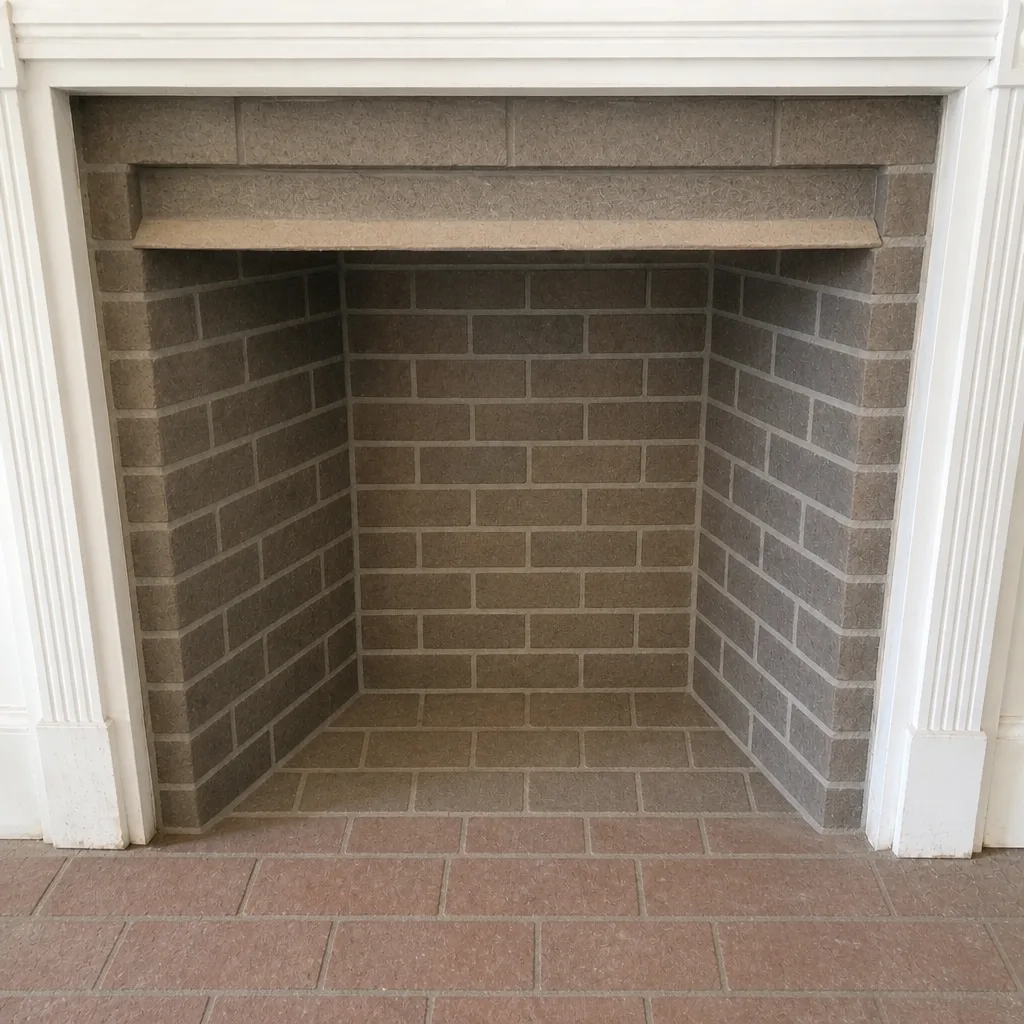 After
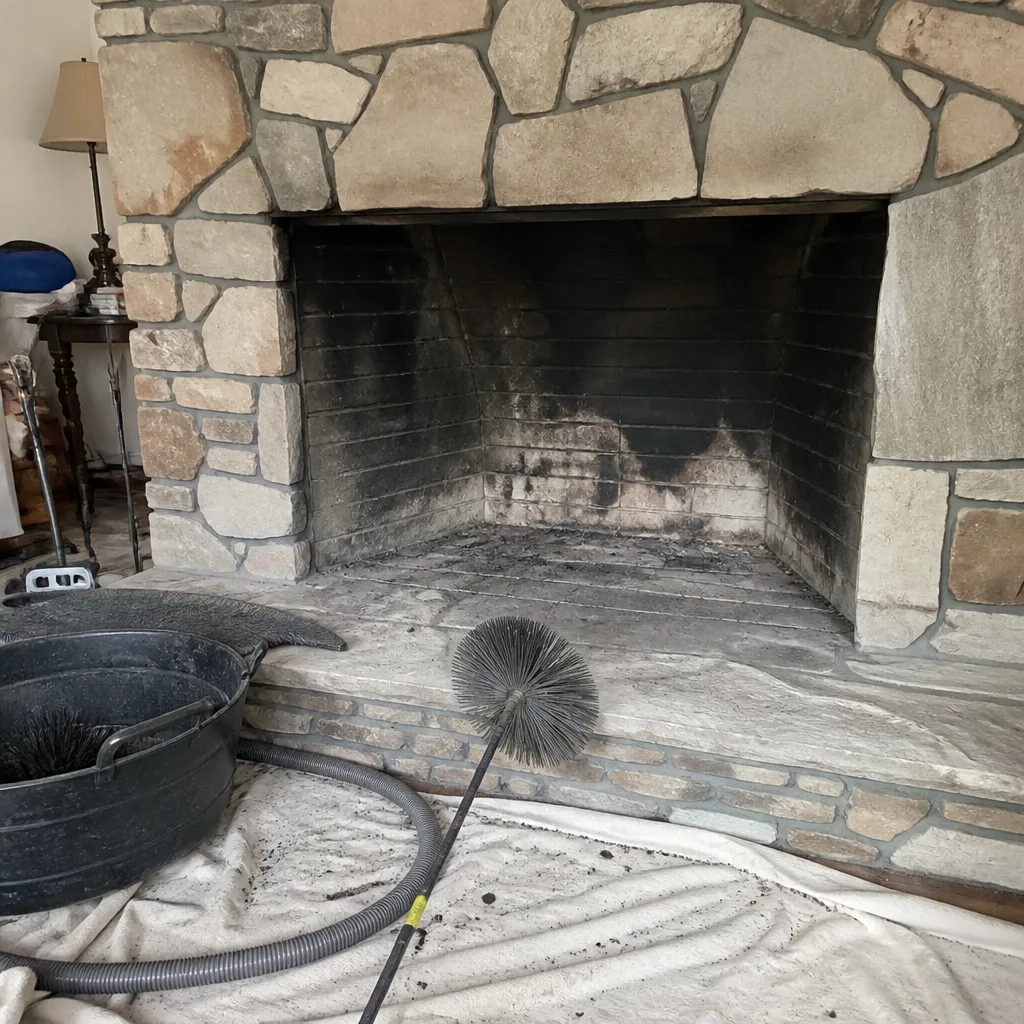 Before
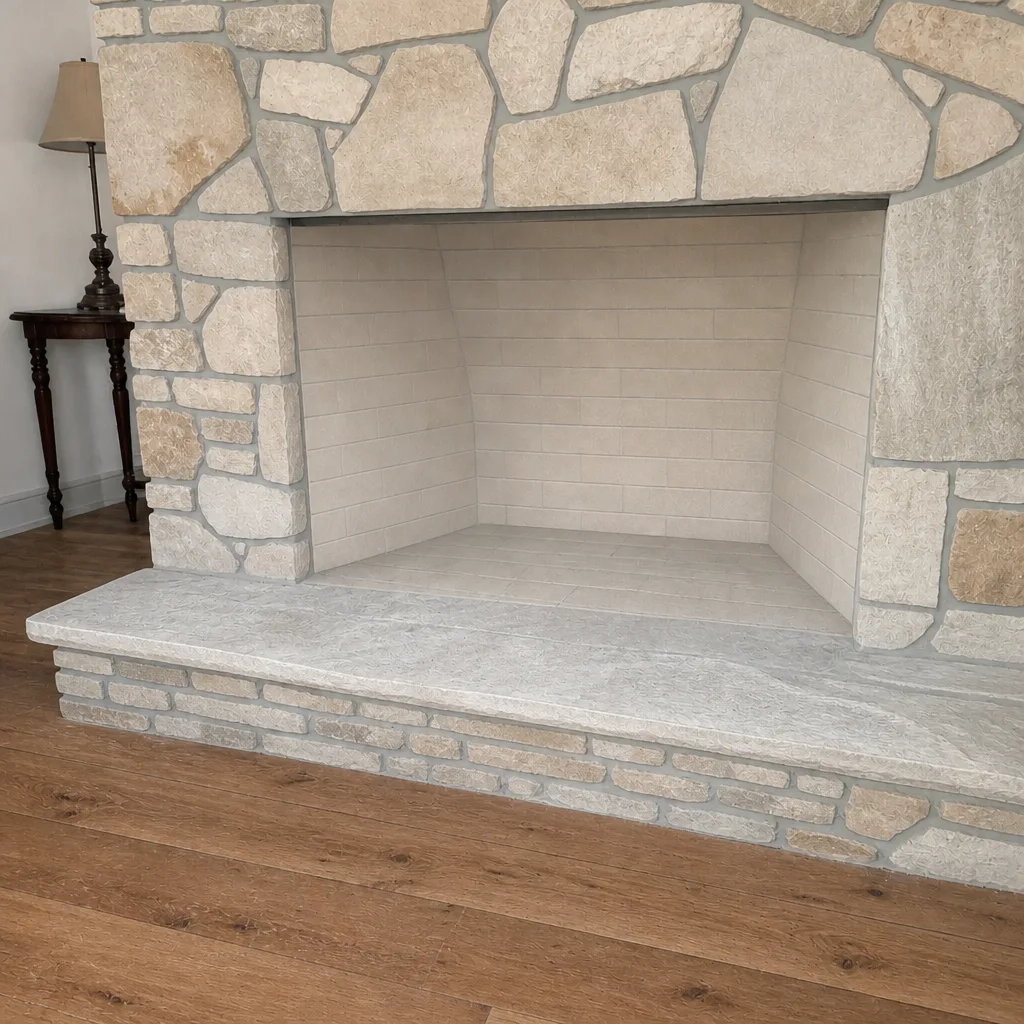 After
When to Call a Professional
Some chimney issues can wait. Others can’t. Call for a professional look if smoke backs into the room when you light a fire, if you smell a burning odor that seems to come from the chimney itself, if you see masonry cracks that widen over the season, if the fire is hard to start or burns poorly, if the firebox shows rust or white chalky staining, or if you’ve never had the chimney inspected and you don’t know its history. A carbon monoxide alarm going off while your fireplace or gas appliance is running is a stop-using-it-and-call situation.
The other time to call is simply the annual sweep and inspection. You don’t need a problem to book one. Chimney Sweep Evansville offers free estimates in Evansville – call (833) 365-6875. We inspect before we sweep, the price is set per job by the written estimate, and if the biggest thing we find is a flue that just needs cleaning, that’s what we’ll tell you.
Frequently Asked Questions
Most wood-burning chimneys should be swept once a year, and more often if the wood burned produces heavy buildup. The basic rule is to have it cleaned when creosote has accumulated enough to be a problem, and the annual inspection tells you whether you’re there. Evansville’s long heating season and swings between fires can push buildup faster than a mild climate would. Call (833) 365-6875 for an exact quote – estimates are free.
Late summer is the best window. The weather is still warm enough for repair work, the fall rush hasn’t started, and there’s time to finish anything the sweep turns up before heating season. Booking earlier than the October crunch gives you more choice of appointments and keeps repair work out of the coldest weeks of the year. Call (833) 365-6875 for an exact quote – estimates are free.
Freeze-thaw widens cracks in mortar joints, crowns, and brick by letting water seep in, freezing, expanding, and then thawing. Repeated cycles over a winter can turn a hairline crack into a significant one. Southwest Indiana gets several of these cycles most winters, which is why spring inspections matter here. Call (833) 365-6875 for an exact quote – estimates are free.
A sweep cleans the flue; an inspection tells you what condition it’s in, and only a camera inspection shows the flue tiles and liner in view. A sweep alone can leave a cracked or deteriorated liner undetected, because you can’t see it from the firebox. We inspect before we sweep, and we include a photo report so you see what we see. Call (833) 365-6875 for an exact quote – estimates are free.
Skipping maintenance leaves two risks sitting unaddressed: creosote buildup, which is the fuel behind most chimney fires, and undetected damage to the flue or masonry that gets worse with each season. A blocked or damaged flue can also let carbon monoxide into the home. Call (833) 365-6875 and we’ll tell you what your chimney actually needs – and if the answer is “not much yet,” we’ll say so.
A gas insert doesn’t produce creosote the way wood does, but it does produce moisture and acidic condensation, and its venting still needs inspection. Gas appliances vent year-round, so keeping the termination clear matters even when you’re not using the fireplace. Both types depend on a sound liner, and both benefit from the same seasonal check rhythm. Call (833) 365-6875 for an exact quote – estimates are free.
The Bottom Line
Chimney care in Evansville works best as a year-round system, not a single annual appointment. The season that stresses your masonry isn’t the season that’s easiest to schedule, and that gap is where expensive surprise repairs come from. Inspect in spring while winter damage is fresh. Protect against moisture in summer while the weather allows. Book your sweep in late summer before the fall crunch. Test carefully in fall, and watch closely in winter. Whether your fireplace is wood or gas, the flue is the part that matters most, and it’s the part you can’t see. A camera inspection with a photo report makes the invisible visible – and that’s the foundation of every good repair decision.
Ready to Start the Clock?
Whether you’re scheduling the sweep you meant to do last fall or you’ve never had your chimney inspected, a specialist can tell you what the system needs without guessing. We work with the same materials the pros specify – DuraFlex liner systems, HeatShield flue-tile resurfacing, and Olympia Chimney components – and we handle inspection, sweep, and repair in one visit, from the firebox to the crown. Chimney Sweep Evansville offers free estimates in Evansville. Call (833) 365-6875. We answer 24/7. Fast dispatch from 7am to 7pm, Sunday through Friday. Our technicians have up to 13 years of experience, and our recommendations follow what the camera shows – not the other way around.
Written by the team at Chimney Sweep Evansville.